Pollinator Garden Design: Creating a Haven with Milkweed and Coneflowers
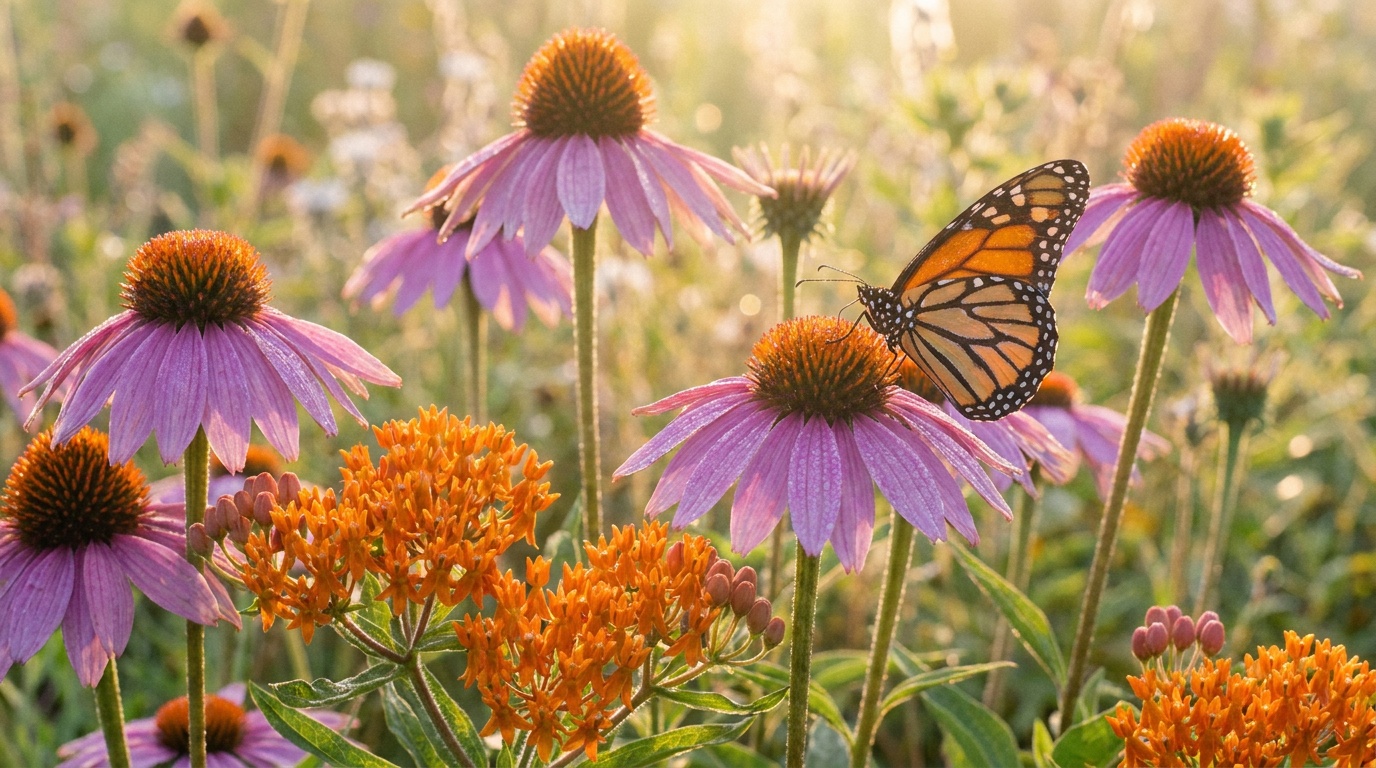
Pollinator Garden Design: Creating a Haven with Milkweed and Coneflowers
Reading time: 14 minutes
Ever looked at your backyard and wondered if it could do more than just look pretty? You’re not alone — and you’re asking exactly the right question. In 2026, as pollinator populations continue to face mounting pressure from habitat loss, pesticide exposure, and climate disruption, the gardens we plant have never mattered more. Creating a pollinator haven isn’t just a feel-good weekend project — it’s a measurable, powerful act of ecological restoration that starts right outside your door.
Whether you’re a first-time gardener clutching a packet of coneflower seeds or an experienced horticulturalist ready to go deep on native plant ecology, this guide gives you the strategic framework to design a pollinator garden that actually works — not just for the Instagram shot, but for the bees, butterflies, and birds that desperately need it.
Here’s the straight talk: A successful pollinator garden isn’t about perfection — it’s about intentional plant selection, thoughtful design, and a little patience. And two plants, above all others, deserve a starring role: milkweed (Asclepias spp.) and coneflowers (Echinacea spp.).
Table of Contents
- Why Pollinators Matter More Than Ever in 2026
- Milkweed: The Monarch’s Lifeline and So Much More
- Coneflowers: The Garden Workhorse for Every Pollinator
- Pollinator Garden Design Principles
- Companion Planting: Building the Perfect Ecosystem
- Milkweed vs. Coneflower: A Side-by-Side Comparison
- Common Challenges and How to Overcome Them
- Real Garden Transformations: Case Studies
- Frequently Asked Questions
- Your Pollinator Garden Roadmap: Start This Season
Why Pollinators Matter More Than Ever in 2026
The numbers are sobering. According to the North American Pollinator Protection Campaign’s 2025 annual report, wild bee populations in the continental United States declined by an estimated 26% over the last decade, with the most dramatic losses concentrated in monoculture agricultural zones and suburban sprawl areas. Monarch butterfly populations, while showing slight recovery in 2024–2025 due to coordinated conservation efforts, remain classified as endangered under IUCN criteria as of early 2026.
Meanwhile, roughly one in three bites of food we eat depends on pollinator activity — from almonds and apples to squash and strawberries. The economic value of pollination services in North America alone is estimated at over $29 billion annually, according to USDA figures updated in 2025.
But here’s what often gets lost in the statistics: gardens matter enormously. Research published in the journal Ecological Applications in late 2025 demonstrated that interconnected networks of residential pollinator gardens can effectively function as wildlife corridors, especially in fragmented suburban environments. Individual yards, when planted thoughtfully, collectively create a green infrastructure that supports population recovery.
“Private gardens now represent one of our most underutilized conservation tools. The cumulative area of residential yards in the United States exceeds the total acreage of all national parks combined.” — Dr. Sarah Bergmann, Urban Ecologist, University of Minnesota, 2025
This isn’t just ecological charity. It’s a practical investment in a resilient, beautiful outdoor space that rewards you with movement, color, and life from early spring through the first hard frost.
Milkweed: The Monarch’s Lifeline and So Much More
Understanding the Milkweed Ecosystem Role
Milkweed carries a bit of an image problem — the name itself evokes something unwanted, invasive, out of place. But Asclepias species are among the most ecologically rich native plants available to North American gardeners. They are the exclusive host plant for monarch butterfly larvae, meaning without milkweed, monarchs simply cannot reproduce. But their value extends far beyond monarchs.
Milkweed flowers produce abundant nectar that attracts an extraordinary range of pollinators: honeybees, native bumblebees, sweat bees, wasps, beetles, hummingbirds, and numerous butterfly species including painted ladies, red admirals, and sulfurs. The plant’s architecture — those distinctive clustered flowers with upswept petals — creates a feeding platform that is physically accessible to insects of many sizes.
There are over 70 species of milkweed native to North America, and choosing the right species for your region is the most important decision you’ll make. Here are the most garden-worthy options by region:
- Common Milkweed (Asclepias syriaca) — Best for eastern and midwestern gardens. Spreads via rhizomes; ideal for larger naturalized spaces.
- Butterfly Weed (Asclepias tuberosa) — Brilliant orange blooms, compact form, drought-tolerant. Perfect for borders and smaller spaces throughout most of the U.S.
- Swamp Milkweed (Asclepias incarnata) — Pink or white flowers, thrives in moist soils, excellent for rain gardens and low areas.
- Showy Milkweed (Asclepias speciosa) — The western equivalent of common milkweed; essential for Pacific Coast and Great Basin gardens.
- Tropical Milkweed (Asclepias curassavica) — A word of caution: while visually striking and easy to grow, this non-native species does not die back in warm climates. In 2025, the Xerces Society updated its guidance recommending against planting tropical milkweed in USDA zones 9–11 unless cut back aggressively in winter, due to its role in disrupting monarch migration patterns.
Growing Milkweed Successfully: Practical Tips
Milkweed has a reputation for being tricky to establish from seed, and that reputation is partly deserved. The key is understanding the plant’s needs from the start.
Seed stratification is essential for most native milkweed species. Cold-moist stratification — wrapping seeds in a damp paper towel inside a sealed bag in your refrigerator for 30 days — mimics the natural winter dormancy cycle and dramatically improves germination rates. Alternatively, direct-sow seeds outdoors in fall and let winter do the work for you.
Once established, milkweed is remarkably self-sufficient. Most native species are deep-rooted, drought-tolerant, and require little to no supplemental fertilization. In fact, rich, fertilized soil often produces lush foliage at the expense of flowers. Plant milkweed in full sun (at least 6 hours daily) and lean, well-drained soil for best flowering results.
Pro Tip: Don’t panic when milkweed gets eaten to the ground by monarch caterpillars. That is exactly what it’s supposed to do. The plant will regenerate vigorously if healthy, and watching a bare plant bounce back after supporting a generation of monarchs is one of the most satisfying experiences in garden ecology.
Coneflowers: The Garden Workhorse for Every Pollinator
Why Echinacea Belongs in Every Pollinator Garden
If milkweed is the ecological specialist of the pollinator garden, coneflowers are the reliable all-rounder. Echinacea purpurea and its relatives offer a multi-season resource that begins with nectar-rich blooms in midsummer and transitions to seed heads that provide food for goldfinches, chickadees, and other birds well into winter.
Coneflowers attract an impressive diversity of pollinators. Their large, flat-faced blooms with prominent central cones provide a stable landing platform for larger bees, while the disc florets — the tiny flowers packed into that central cone — offer nectar accessible to smaller native bee species. In a 2024 study conducted by the Prairie Research Institute at the University of Illinois, Echinacea purpurea was documented hosting 47 distinct bee species across a single growing season — one of the highest diversity counts recorded for any single native plant species in temperate North America.
Beyond bees, coneflowers attract:
- Butterflies — especially swallowtails, skippers, and fritillaries
- Hummingbird moths (Hemaris spp.) — arguably the most spectacular garden visitor of all
- Soldier beetles and other beneficial insects that also predate garden pests
- Goldfinches — which cling acrobatically to seed heads from August through January
Choosing the Right Coneflower Varieties
The coneflower world has exploded with cultivars over the past decade, and not all of them serve pollinators equally well. This is a critical point that many garden centers don’t emphasize enough.
Highly hybridized cultivars with double or fully doubled flowers — varieties like ‘Double Scoop Cranberry’ or ‘Coconut Lime’ — have architectural interest but significantly reduced pollen and nectar availability. Pollinators simply can’t access the resources effectively when petals obscure the disc florets.
The best pollinator-friendly coneflower choices for 2026 include:
- Echinacea purpurea (species form) — The gold standard. Vigorous, long-blooming, extremely attractive to all pollinators.
- ‘Magnus’ — A widely available cultivar with large, horizontal petals and exceptional bee visitation rates. Perennial Plant of the Year winner.
- ‘Kim’s Knee High’ — Compact form ideal for smaller gardens, excellent pollinator value.
- Echinacea pallida (pale purple coneflower) — Native to the Great Plains, distinctive drooping petals, exceptionally valuable for specialist native bees.
- Echinacea angustifolia (narrow-leaved coneflower) — The most drought-tolerant species, essential for gardens in drier climates.
Pollinator Garden Design Principles
A collection of good plants does not automatically make a great pollinator garden. Design matters — both for the pollinators who will use it and for you, the gardener who has to live with it. Here’s how to approach the design process strategically.
The Layered Planting Approach
Successful pollinator gardens mimic the structural complexity of natural ecosystems. Think in layers:
- Canopy/Shrub Layer — Flowering shrubs like native viburnums, buttonbush (Cephalanthus occidentalis), or native roses anchor the design and provide early/late season blooms.
- Tall Perennial Layer (3–5 feet) — This is where common milkweed, tall coneflowers, wild bergamot, and Joe-Pye weed live. These create visual structure and the primary foraging zone.
- Mid Perennial Layer (1–3 feet) — Butterfly weed, shorter coneflower cultivars, black-eyed Susans, and native salvias fill this critical zone where most of the pollinator action happens.
- Ground Layer — Low-growing plants like wild ginger, creeping thyme, or violets (critical for fritillary butterflies) reduce weed pressure and provide resources for ground-nesting bees.
Bloom Succession Planning is arguably the most important design concept after plant selection. Your goal is to have something in flower from early April through late October. A common mistake is creating a garden that peaks beautifully in July but offers nothing in early spring (when queens are establishing colonies) or late fall (when bees are building winter reserves).
Milkweed typically blooms June–August depending on species and region. Coneflowers bloom July–September. These fill the crucial midsummer peak perfectly — but you’ll want to supplement with early bloomers (bloodroot, native violets, wild columbine) and late-season plants (native asters, goldenrods, ironweed).
Sizing and Placement
Research consistently shows that patch size matters for pollinator visitation. Gardens under 10 square feet receive significantly fewer pollinator species than those over 25 square feet. A 2025 study from the Royal Horticultural Society found that gardens with at least 3 meters × 3 meters of connected pollinator planting showed 70% more bee species richness than scattered individual plantings of equivalent total area.
If space is limited, concentrate your planting in connected blocks rather than spreading it thinly across the yard. A single well-designed 4′ × 8′ raised bed planted intensively will outperform a dozen isolated plants scattered across a lawn.
Companion Planting: Building the Perfect Ecosystem
Milkweed and coneflowers are your anchor plants, but a truly resilient pollinator garden incorporates a wider community. Think of these companions as expanding the season, diversifying resources, and creating habitat complexity:
- Goldenrod (Solidago spp.) — The single most valuable late-season plant for native bees. Provides critical pre-winter nutrition. Despite its reputation, it does not cause hayfever (that’s ragweed, which blooms simultaneously).
- Native Asters (Symphyotrichum spp.) — Blooming September–October, native asters are the final feast before winter. New England aster is a particular favorite of monarch butterflies fueling up for their southern migration.
- Wild Bergamot (Monarda fistulosa) — Lavender-pink blooms are irresistible to bumblebees and hummingbirds. More mildew-resistant than scarlet bee balm.
- Native Grasses — Little bluestem, prairie dropseed, and sideoats grama provide nesting habitat for ground-dwelling native bees and overwintering sites for beneficial insects.
- Anise Hyssop (Agastache foeniculum) — One of the highest-rated plants for bee visitation in multiple studies, with a long bloom period from July through frost.
Milkweed vs. Coneflower: A Side-by-Side Comparison
| Characteristic | Milkweed (Asclepias spp.) | Coneflower (Echinacea spp.) |
|---|---|---|
| Primary Pollinator Value | Monarch host plant; nectar source for 100+ species | Nectar/pollen for 47+ bee species; seed food for birds |
| Bloom Period | June–August (species dependent) | July–September (with seed heads to January) |
| Sun Requirements | Full sun (6+ hours) | Full sun to partial shade (4–6 hours min.) |
| Soil Preference | Lean, well-drained; tolerates drought once established | Average to lean; excellent drought tolerance |
| Maintenance Level | Low once established; may spread by rhizome | Very low; self-seeds; deadheading optional |
Pollinator Attraction Ratings by Plant Type
The following chart represents relative pollinator visitation frequency scores compiled from multi-site garden monitoring studies conducted across North America in 2024–2025 (scale: 0–100):
Source: Compiled from North American Pollinator Monitoring Network data, 2024–2025. Scores reflect relative visitation frequency (0–100 scale).
Common Challenges and How to Overcome Them
Challenge 1: Aphids on Milkweed
If you’ve grown milkweed before, you’ve almost certainly encountered oleander aphids (Aphis nerii) — those vivid orange-yellow clusters that colonize new growth with seemingly overnight speed. New gardeners often panic and reach for pesticides, which is precisely the wrong response in a pollinator garden.
Here’s the perspective shift that changes everything: aphids on milkweed are generally cosmetic, not fatal. Healthy, established milkweed tolerates significant aphid pressure without long-term damage. More importantly, aphid colonies attract their own predator community — lacewing larvae, parasitic wasps, and lady beetles will arrive within days and begin natural population control.
Actionable response: If populations are severe on young plants, blast them with a strong stream of water from a hose. Never use systemic pesticides like neonicotinoids near milkweed — these will contaminate the plant tissue and harm monarch caterpillars and other beneficial insects for weeks after application.
Challenge 2: Coneflower Aster Yellows Disease
Aster yellows is a phytoplasma disease spread by leafhopper insects that causes coneflowers to develop distorted, greenish, witches’-broom-like growth at the flower center. Infected plants will not recover. The straightforward solution: remove and dispose of infected plants in the trash (not compost), and replant with fresh stock. Minimizing lawn-like conditions that favor leafhoppers — long-season grass monocultures — reduces pressure over time.
Challenge 3: Deer and Rabbit Pressure
Milkweed is somewhat deer-resistant due to its bitter, milky latex sap, but young coneflowers are prime targets for both deer and rabbits. In high-pressure areas, protecting plants through their first growing season with wire cloches or tree tubes until they’re established is the most reliable strategy. Spraying plants with a diluted bitter orange or hot pepper solution provides temporary deterrence and needs reapplication after rain.
Real Garden Transformations: Case Studies
Case Study 1: The Columbus Backyard Corridor (Ohio, 2025)
In spring 2024, a homeowner in Columbus, Ohio converted a 400-square-foot lawn area into a native pollinator garden centered on swamp milkweed, butterfly weed, purple coneflower, and native asters. By late summer 2025, monitoring using the iNaturalist app documented 23 bee species, 14 butterfly species, and 3 hummingbird moth sightings within a single growing season — in a suburban backyard surrounded by conventional turf lawns. The garden also attracted a pair of American goldfinches that fed on coneflower seed heads through December. The initial investment was approximately $340 in plants and soil amendment; ongoing costs dropped to under $50/year.
Case Study 2: The Minneapolis Community Garden Network
Since 2022, the Minneapolis Park and Recreation Board has been implementing a network of pollinator gardens across 34 community garden sites, with milkweed and native coneflowers as foundational species in every installation. By early 2026, the program reports a 41% increase in monarch egg-laying documentation across monitored sites compared to 2022 baseline counts, and collaborative citizen science data shows measurable increases in native bee diversity. The program has become a model referenced by urban planners in Chicago, Denver, and Toronto seeking to replicate the approach.
Frequently Asked Questions
Can I grow milkweed and coneflowers in containers or small urban spaces?
Absolutely — with the right species selection. Butterfly weed (Asclepias tuberosa) performs well in large containers (at least 15-gallon volume) and is one of the most compact milkweed species available. Purple coneflower cultivars like ‘Kim’s Knee High’ (18–24 inches) are excellent container performers. The key in containers is ensuring adequate drainage, using a lean native-plant mix rather than rich potting soil, and committing to watering during establishment. Rooftop gardens, balconies, and urban courtyards can all become meaningful pollinator resources when planted thoughtfully, even at small scale.
Is it safe to plant milkweed if I have pets or children?
Milkweed contains cardiac glycosides — compounds that are toxic if consumed in significant quantities by mammals, including dogs, cats, and humans. However, the bitter taste is a strong deterrent, and poisoning incidents from garden milkweed are extremely rare. Children and pets typically do not consume it voluntarily. Exercise reasonable supervision with very young children and pets known to chew plants. Swamp milkweed (Asclepias incarnata) has lower toxicity levels than common milkweed and may be a preferable choice for households with high-concern situations. As always, wash hands after handling plant sap.
When is the best time to plant milkweed and coneflowers for maximum establishment success?
For most of North America, spring planting (April–May) after last frost gives both milkweed and coneflowers the longest possible growing season to establish root systems before their first winter. However, fall planting (September–October) is also highly effective, particularly for direct-seeding native species — cold stratification occurs naturally over winter and germination rates can be excellent the following spring. Bare-root and potted nursery transplants establish most successfully with spring planting paired with consistent moisture for the first 4–6 weeks. Avoid mid-summer planting in hot climates, as heat stress during establishment significantly reduces survival rates.
Your Pollinator Garden Roadmap: Start This Season
You now have the knowledge. What matters is what you do with it. Here’s a clear, sequenced action plan to move from reading to planting:
- Assess your site this week. Walk your yard and identify a south- or east-facing area with at least 6 hours of sun. Even 25 square feet is enough to start. Note the soil drainage — does water pool after rain?
- Select your plants based on your region. Use the Native Plant Finder tool at the National Wildlife Federation’s website (updated for 2026 with expanded regional data) to identify which milkweed species are native to your specific zip code. Pair with Echinacea purpurea as your coneflower foundation.
- Source from reputable native plant nurseries. Avoid plants labeled “neonicotinoid treated” — these systemic pesticides persist in plant tissue and harm the very insects you’re trying to support. Ask nurseries directly about pesticide use. Many regional native plant societies hold spring sales with vetted stock.
- Plan for bloom succession. Before purchasing, map out your bloom calendar. Ensure you have at least one plant flowering in each of these windows: early spring (April–May), midsummer (June–August), and late season (September–October).
- Let it be wild — at least a little. Resist the urge to deadhead everything, clean up every stem in fall, or achieve perfect tidiness. Hollow stems are bee nesting sites. Seed heads are bird food. Leaf litter harbors overwintering butterfly pupae. The “messy” garden is often the ecologically richest one.
In 2026, the conversation around gardens has fundamentally shifted — from aesthetics-first to function-forward design that acknowledges our yards as part of a larger living system. The gardeners who embrace this shift aren’t sacrificing beauty; they’re discovering that ecological function and visual richness are the same thing.
Here’s the question worth sitting with: What would it mean for your neighborhood if every yard within a two-block radius made even one decision this year to support pollinators? The answer — measured in monarch eggs, buzzing bees, and goldfinches on seed heads in January — might be more transformative than you imagine. Your garden is waiting. The pollinators are too.
Article reviewed by Linda Phillips, Senior Architectural Consultant & Renovation Project Manager, on May 4, 2026