Small Patio Design Ideas That Maximize Outdoor Living Space
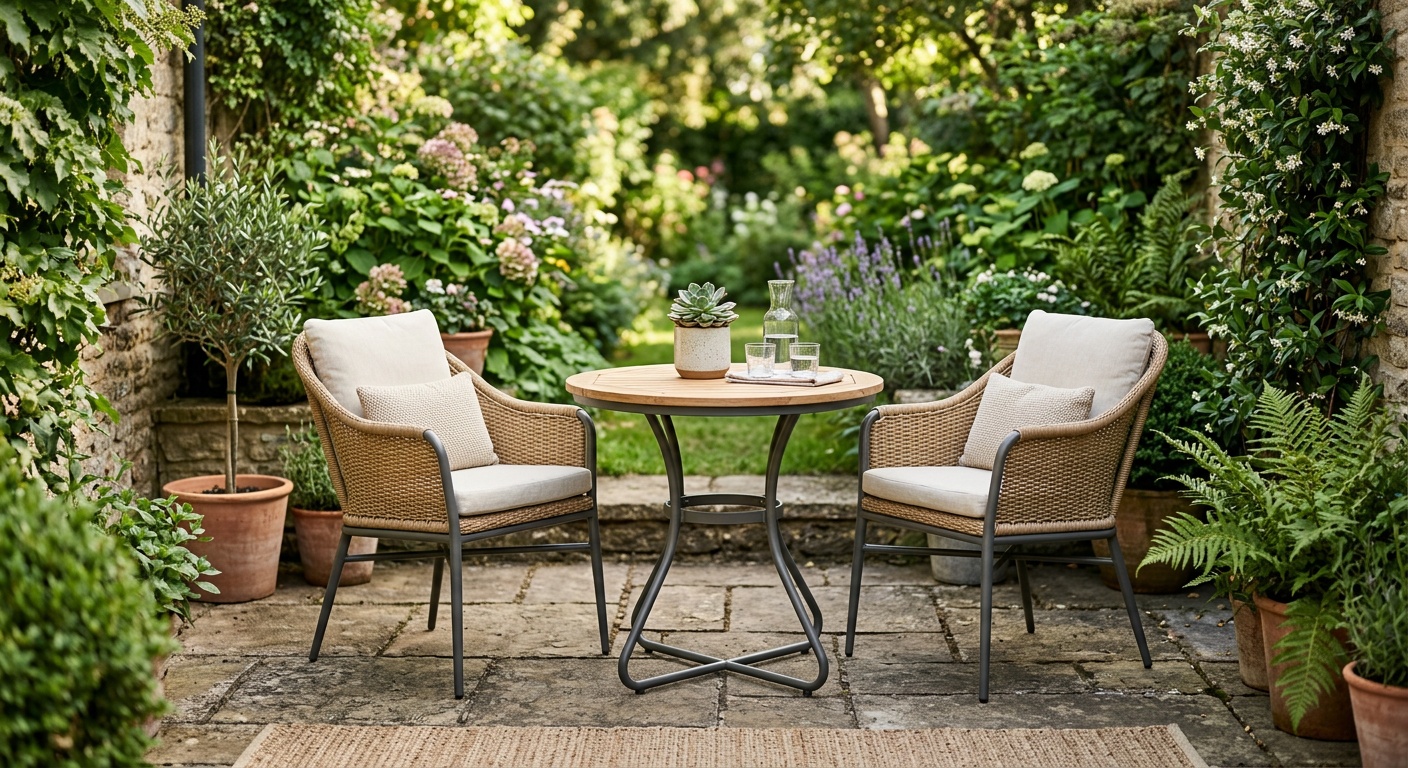
Small Patio Design Ideas That Maximize Outdoor Living Space
Reading time: 12 minutes
Ever stared at your tiny backyard or cramped balcony and thought, “What’s the point?” You’re not alone. Millions of homeowners in 2026 are wrestling with exactly the same challenge — limited outdoor square footage that seems too small to be truly useful. But here’s the straight talk: the size of your patio has almost nothing to do with how much enjoyment you can squeeze out of it. The secret lies in smart, intentional design.
Small patio design has exploded as a discipline in its own right. According to the American Society of Landscape Architects’ 2025 Residential Landscape Trends Report, 74% of homeowners now rank outdoor living space as a top-five priority when renovating or purchasing a home — and more than half of those respondents have patios under 200 square feet. That’s a significant shift. People aren’t waiting for a sprawling yard. They’re creating meaningful outdoor rooms in whatever space they have.
This guide is your practical roadmap — from layout strategies and furniture choices to lighting, greenery, and the psychological design principles that make a small space feel genuinely expansive. Let’s turn your compact outdoor area into a living space you’ll actually use every single day.
Table of Contents
- Why Small Patios Actually Work in Your Favor
- Layout Strategies: The Foundation of Smart Design
- Furniture Choices That Do Double Duty
- Going Vertical: Walls, Trellises, and Living Walls
- Lighting and Ambiance That Transform the Space
- Data Snapshot: What’s Trending in Small Patio Design
- Material Comparison: Choosing the Right Patio Surface
- Real Examples: Three Transformations Worth Studying
- Common Challenges and How to Overcome Them
- Frequently Asked Questions
- Your Outdoor Living Transformation: Next Steps
Why Small Patios Actually Work in Your Favor
There’s a counterintuitive truth that experienced landscape designers have known for years: small spaces force creativity. When you have a 400-square-foot backyard to fill, design decisions often become overwhelming or unfocused. But when you’re working with 80 to 150 square feet? Every choice becomes intentional, and intentional design almost always produces better results.
Think of it this way: a small patio is like a studio apartment. The most beautifully designed studio apartments in Manhattan or Tokyo aren’t cramped — they’re curated. The same principle applies outdoors. Constraint breeds ingenuity, and ingenuity produces spaces that feel personal, cozy, and genuinely livable.
In 2025, the outdoor living industry generated over $53 billion in revenue in the United States alone, according to the Outdoor Living Council’s annual economic report. A substantial portion of that growth was driven by urban and suburban homeowners optimizing small outdoor areas rather than expanding them. The trend has accelerated into 2026, with “micro-patio” design consultations rising 38% year-over-year among residential landscape firms surveyed by Houzz.
“The best patio design I’ve ever done was on a 10-by-12-foot concrete slab in Brooklyn. We layered wood decking, a vertical herb garden, string lighting, and a fold-out dining table. The homeowners said it became their favorite room in the house — and it was outside.” — Carla Mendez, ASLA-certified Landscape Designer, 2025 interview
The psychological benefits are also measurable. A 2025 study published in the Journal of Environmental Psychology found that spending at least 20 minutes per day in a well-designed outdoor space — even a small one — reduced cortisol levels by an average of 21% and improved reported mood scores by 34% compared to those who stayed indoors. Your small patio isn’t just a design project. It’s a wellness investment.
Layout Strategies: The Foundation of Smart Design
Before you buy a single piece of furniture or plant a single shrub, you need a layout plan. This is where most small-patio projects go wrong. People purchase items they love individually, then wonder why the space feels cluttered and chaotic. Good layout strategy begins with one guiding question: How do you want to use this space?
Define Your Primary Use Zone
Small patios almost always work best when they serve one primary function exceptionally well, with secondary functions integrated cleverly. The major use zones to consider are:
- Dining and entertaining: Requires a table, seating for 2-4, and access to light
- Lounging and relaxation: Centered on comfortable seating, shade, and atmosphere
- Gardening and greenery: Built around planters, raised beds, or vertical gardens
- Multi-functional family use: A hybrid approach that maximizes flexibility
Pick one as your anchor and design everything else around it. A common mistake is trying to cram in a dining set, two lounge chairs, a grill station, and a planter garden into 120 square feet. The result? A space that serves no purpose well. Instead, anchor your layout with a bistro table for two with fold-out capability for four, and let the secondary elements — a small planter, a side table, a string of lights — support that primary function.
Use the Grid and Zone Method
Professional landscape designers frequently use the grid-and-zone method for small patios. Here’s how it works in practice:
- Map your space on paper (or use a free tool like RoomSketcher’s outdoor planner) at a 1-inch-to-1-foot scale
- Identify fixed elements: doors, windows, drainage points, utility access areas
- Divide the space into a rough three-zone grid: seating zone, transition zone (pathways), and greenery/buffer zone
- Apply the 60/30/10 rule: 60% of your space for the primary function, 30% for movement and breathing room, 10% for decorative or secondary elements
- Test with cardboard cutouts or tape on the ground before committing to purchases
This systematic approach eliminates guesswork and saves money. Interior designers have used proportional zoning rules for decades; they translate remarkably well to small outdoor spaces.
Diagonal Layouts Create the Illusion of Space
Here’s a design trick used by professionals that most homeowners don’t know: placing elements at a 45-degree angle to your patio’s walls creates the optical illusion of a larger space. When furniture, decking boards, or even tile patterns are oriented diagonally rather than parallel to the longest wall, the human eye travels farther across the surface before reaching an edge. This is the same principle used in small bedroom design — rugs laid diagonally can make a room feel 20-30% larger visually.
Try it with your decking material direction, your outdoor rug orientation, or even the angle of a bistro table. The difference is subtle but genuinely surprising.
Furniture Choices That Do Double Duty
Furniture selection is the single biggest lever you can pull in small patio design. The right pieces will make your space feel generous and functional. The wrong choices will make it feel like a storage unit with cushions.
The guiding principle here is multifunctionality. Every piece of furniture in a small patio should ideally serve two purposes. Here are the categories that deliver the most value:
- Storage benches: Provide seating while concealing cushions, garden tools, or outdoor accessories inside the bench cavity. Brands like Keter and Suncast offer weather-resistant models in 2026 that blend seamlessly with natural materials.
- Extendable tables: A compact bistro table that expands from a two-seater to a four-seater is invaluable for entertaining. Look for butterfly-leaf designs in powder-coated aluminum or teak — both weather-resistant and stylish.
- Stackable and folding chairs: When not in use, these free up critical walking space. Modern stackable chairs in 2026 are far more aesthetically pleasing than the plastic chairs of a decade ago, with options in powder-coated steel, rattan, and recycled polypropylene.
- Ottoman-as-coffee-table combinations: A large, flat-topped outdoor ottoman can serve as a footrest, extra seating, and a surface for drinks and books all at once.
- Built-in bench seating: If you’re willing to invest in a semi-permanent solution, built-in L-shaped or U-shaped bench seating around the perimeter of your patio maximizes seating capacity while minimizing the floor space footprint. Add storage underneath, and you’ve created a genuinely efficient solution.
Material matters, too. In 2026, the most popular outdoor furniture materials for small patios are powder-coated aluminum (lightweight, rust-proof, modern aesthetic), teak (classic, durable, warm tone), and recycled HDPE lumber (sustainable, zero maintenance, increasingly stylish). Avoid heavy wrought iron for small spaces — it’s visually heavy and physically difficult to move when you need flexibility.
Going Vertical: Walls, Trellises, and Living Walls
The single most underutilized resource in small patio design is vertical space. Most homeowners think horizontally — they worry about floor space. But your walls, fences, and overhead structures represent a treasure trove of design opportunity that costs relatively little to develop.
Consider what you can do with a single 8-foot-tall fence panel:
- Mount a vertical planter system growing herbs, flowers, or small vegetables
- Install a fold-down wall-mounted table that disappears when not in use
- Add outdoor wall sconces or string light anchors for evening ambiance
- Hang a decorative mirror (outdoor-rated) to visually double the perceived depth of the space
- Train climbing plants like jasmine, clematis, or wisteria up a trellis for natural privacy and fragrance
Living walls — vertical gardens mounted on a frame or wall — have become increasingly accessible in 2026. Systems like the Woolly Pocket modular planter or the IKEA PIFF vertical garden frame (updated for outdoor use in 2025) allow homeowners to create lush green walls for under $200 without professional installation. A living wall dramatically softens hard surfaces, improves air quality in the immediate vicinity, and adds a level of visual richness that no amount of floor-level planting can replicate in a small space.
Overhead structure is equally powerful. A simple pergola, shade sail, or even a string light canopy defines the space vertically and creates what designers call an “outdoor room feeling” — the psychological sensation of being in an enclosed, intentional space rather than simply sitting on a concrete slab. Shade sails in particular are a 2026 favorite: easy to install, affordable ($50–$300), and available in beautiful neutral and terracotta tones that complement both modern and traditional home styles.
Lighting and Ambiance That Transform the Space
Lighting is the most affordable, highest-impact upgrade available to small patio owners. The right lighting strategy doesn’t just illuminate your patio — it transforms its personality from a daytime utility area into an evening destination you genuinely look forward to using.
A layered lighting approach works best, even in small spaces:
- Ambient lighting: String lights (Edison or globe style) draped overhead provide warm, even illumination and the signature “café terrace” atmosphere that makes outdoor spaces feel magical
- Task lighting: A wall-mounted sconce or a compact outdoor floor lamp near a seating area provides functional light for reading, dining, or conversation
- Accent lighting: Solar-powered stake lights along the perimeter, LED strips under bench seating, or uplighting on a feature plant add visual depth and dimension
In 2026, solar-powered lighting technology has matured significantly. Modern solar string lights from brands like Brightech and Brightown can run for 8-10 hours on a single charge, even in partially shaded locations, thanks to improved photovoltaic efficiency. This eliminates the need for electrical wiring, making installation a genuine weekend DIY project with no professional help required.
Color temperature matters enormously. For patios, aim for warm white lights in the 2700K–3000K range. Cool white (4000K+) creates a clinical, office-like atmosphere that works against the relaxation you’re trying to achieve. This single specification — color temperature — is something most homeowners overlook and professionals always specify.
Data Snapshot: What’s Trending in Small Patio Design (2026)
Here’s a look at the most popular small patio design features based on 2025–2026 survey data from Houzz, the ASLA, and the National Association of Home Builders:
Most Requested Small Patio Features (2026)
Source: Houzz Residential Landscaping Survey 2025–2026; ASLA Trend Report 2025
Material Comparison: Choosing the Right Patio Surface
Your patio surface sets the tone for everything else. It affects maintenance burden, aesthetics, durability, and cost. Here’s a focused comparison of the most popular options for small patio applications in 2026:
| Material | Cost (per sq ft) | Durability | Maintenance | Best For |
|---|---|---|---|---|
| Concrete Pavers | $6–$15 | ★★★★★ | Low | Modern, clean aesthetics |
| Composite Decking | $9–$22 | ★★★★☆ | Very Low | Warm, wood-look finish |
| Natural Stone (Bluestone/Slate) | $15–$35 | ★★★★★ | Medium | Upscale, timeless look |
| Porcelain Tile | $8–$20 | ★★★★☆ | Low | Mediterranean/European style |
| Gravel with Stepping Stones | $2–$8 | ★★★☆☆ | Medium | Budget-conscious, cottage style |
Pro Tip: For small patios specifically, lighter-colored surfaces (pale concrete, light stone, cream porcelain) create the optical illusion of more space. Dark surfaces absorb heat and visually compress the area. If you love dark slate or charcoal pavers, compensate with lighter furniture and greenery to maintain visual balance.
Real Examples: Three Transformations Worth Studying
Case Study 1: The 80-Square-Foot Urban Balcony in Chicago
In 2025, interior designer Maya Okafor documented a project for a client living in a high-rise condo in Chicago’s Wicker Park neighborhood. The outdoor space was a single 8×10-foot concrete balcony with a metal railing — the kind most people would dismiss as unusable. Okafor’s approach was layered and deliberate:
- Installed interlocking wood deck tiles directly over the concrete — no permits needed, completely reversible
- Added a wall-mounted fold-down table that collapses flat when not in use
- Installed a custom vertical planter across the full railing height, growing tomatoes, herbs, and trailing nasturtiums
- Hung two pendant solar lights from the ceiling overhang above
- Used a single compact loveseat (measuring 50 inches wide) as the only seating — no additional chairs
The total project cost was $1,850. The client reported using the balcony every day from April through October and described it as “the only place I truly decompress.” The project was featured in Apartment Therapy in early 2026 and generated significant reader interest precisely because of its small scale.
Case Study 2: The 150-Square-Foot Suburban Patio Overhaul in Austin
A young family in Austin, Texas tackled their narrow side-yard patio — 15 feet wide by 10 feet deep — in spring 2025 with a budget of $3,500. Their key challenge was needing the space to function for both adult entertaining and child play without feeling segregated or chaotic.
Their solution was a dual-zone approach: one half anchored by a round bistro table (round tables work better than rectangular ones in tight spaces — no sharp corners, better conversation flow), and the other half left deliberately open as a flex zone. A low horizontal cedar planter box separated the zones visually without blocking sightlines. Edison string lights ran the entire perimeter overhead, unifying both zones after dark.
The flex zone housed a small outdoor chalkboard mounted to the fence for kids during the day and was cleared easily for an extra folding chair or two when guests visited in the evening. The family called this their “convertible patio” — a framing concept that more designers are now adopting when advising clients on small-space multifunctionality.
Case Study 3: The Retirement Cottage Garden Patio in Portland
Not every small patio challenge is about urban density. In Portland, Oregon, a retired couple transformed a 12×12-foot backyard corner previously dominated by an overgrown hedge into their primary outdoor living space. Their priority was sensory richness — fragrance, texture, color, and birdsong — rather than entertainment capacity.
The design centered on a simple teak bench with cushions, surrounded by layered container planting at three heights: tall ornamental grasses in the back, mid-height lavender and salvia in the middle, and low-growing thyme and chamomile spilling over the paver edges at ground level. A small recirculating water feature (solar-powered, installed in a half-barrel) provided the gentle sound of moving water. Lighting was kept minimal — two small lantern-style solar pathway lights and a single warm-tone wall sconce mounted near the gate.
Total investment: $2,200 including plants. The result was a space the couple described as their “daily retreat” — proof that patio design doesn’t have to be about maximizing utility. Sometimes it’s about maximizing peace.
Common Challenges and How to Overcome Them
Challenge 1: Privacy in an Exposed Space
One of the most common frustrations with small patios — especially in urban or densely built suburban neighborhoods — is lack of privacy. If you feel like you’re on display whenever you step outside, you simply won’t use the space.
Solutions to consider:
- Bamboo screening panels: Fast to install, visually attractive, and highly effective. Choose clumping bamboo in planters for a living screen that grows taller over time.
- Privacy lattice with climbing plants: A cedar lattice panel attached to an existing fence, topped with jasmine or climbing roses, creates a beautiful natural privacy screen within one growing season.
- Outdoor curtain panels: Installed on a simple tension rod or curtain wire strung between posts, outdoor curtain panels in weather-resistant polyester create an instant privacy enclosure that also adds soft, romantic texture.
- Strategic tall container planting: Three or four large pots with tall ornamental grasses or columnar evergreens (Italian cypress, emerald arborvitae) create a living privacy screen that can move if you relocate.
Challenge 2: Heat and Glare on South-Facing Patios
South- and west-facing patios can become uncomfortably hot in summer, particularly in warmer climates like the American Southwest, South, and Mediterranean Europe. Without addressing this, your beautiful patio sits empty during peak outdoor weather hours.
Solutions: A shade sail is the fastest, most affordable fix ($60–$250, DIY installation in under two hours). For a more permanent solution, a simple pergola with a retractable fabric canopy offers adjustable shade and incredible visual presence. Adding a large outdoor fan (ceiling-mounted to a pergola beam or freestanding with a weighted base) moves air and creates evaporative cooling that can reduce perceived temperature by 8–10°F. In 2026, solar-powered outdoor fans have become a viable option, eliminating the need for electrical wiring entirely.
Challenge 3: Making a Patio Feel Finished, Not Makeshift
A small patio can easily feel like an afterthought — a few chairs on a slab of concrete — rather than a deliberate outdoor room. The difference between “makeshift” and “designed” often comes down to three finishing elements:
- An outdoor rug: This single addition defines the seating area, adds color and pattern, and creates the immediate psychological sensation of being in a room. Choose a rug at least 4×6 feet even for small patios — undersizing a rug is a common mistake that makes a space feel smaller, not larger.
- Consistent color palette: Limit your cushion, planter, and accessory colors to a palette of 2-3 colors maximum. Mismatched colors across small spaces are visually chaotic and make the area feel cluttered even when it isn’t.
- One statement piece: A fire pit table, an eye-catching oversized planter, a water feature, or a distinctive piece of outdoor art gives the space a focal point and signals intentional design rather than furniture accumulation.
Frequently Asked Questions
How small is too small for a functional patio?
Realistically, any outdoor space of 40 square feet or more can be made functional with the right approach. A 6×7-foot balcony can comfortably hold a small bistro table, two chairs, and a pair of compact container plants — which is enough for morning coffee, a meal for two, or an evening wind-down. The key is not trying to replicate what you’d do with a larger space, but designing specifically for the dimensions you have. Even a 4×8-foot landing outside a back door can become a meaningful micro-retreat with a wall-mounted fold-down bench, a hanging planter, and a couple of string lights.
What’s the best low-maintenance plant for a small patio?
For small patios in 2026, lavender, ornamental grasses, and succulents consistently top the list for low-maintenance, high-impact performance. Lavender thrives in containers, tolerates drought once established, repels mosquitoes naturally, and provides fragrance that genuinely enhances the outdoor experience. Ornamental grasses like ‘Karl Foerster’ feather reed grass or ‘Morning Light’ miscanthus provide year-round structure, movement in the breeze, and beautiful autumn color with virtually no care beyond an annual cutback. For shadier patios, ferns and hostas in large containers are reliable workhorses. The critical rule: match plant choice to your specific light conditions rather than buying whatever looks good at the nursery.
Is it worth hiring a landscape designer for a small patio project?
For projects with a budget under $2,000, a full-service landscape designer may not be cost-effective since design fees typically range from $500 to $2,500 for small residential projects. However, a one-hour design consultation (increasingly offered by landscape firms in 2026 for $75–$200) can be extraordinarily valuable — a professional’s fresh perspective on your layout and material choices can prevent costly mistakes and generate ideas you’d never arrive at independently. Alternatively, online design services like Tilly or Yardzen offer budget-friendly digital design packages specifically for small outdoor spaces, starting around $200–$400, and have become genuinely sophisticated offerings by 2026. For DIY enthusiasts, the Houzz and Pinterest platforms remain valuable free resources, but cross-reference ideas with your actual space dimensions before committing to anything.
Your Outdoor Living Transformation: Next Steps
You’ve now got the framework. Let’s make it actionable. Here’s your implementation roadmap — designed to take you from where you are now to a small patio that genuinely changes how you live:
- This weekend: Grab a tape measure and map your space on paper. Apply the 60/30/10 zoning rule and identify your primary use function. Snap photos from multiple angles — you’ll reference these constantly.
- Within two weeks: Choose your surface material if it needs updating, or commit to adding an outdoor rug to define your primary zone. Order or source your anchor furniture piece (bistro table, built-in bench, or loveseat — depending on your primary use function).
- Within one month: Install your vertical element — a trellis, living wall panel, bamboo privacy screen, or shade sail. This single step transforms a flat, two-dimensional space into a genuinely immersive environment.
- Ongoing: Layer in the finishing details — lighting, plants, textiles, and your one statement piece — one at a time. Resist the urge to do everything at once. Small patios reveal their potential gradually, and the best results come from thoughtful iteration rather than a single overwhelming purchase event.
As cities continue to densify and housing footprints shrink — a trend accelerating across North America, Europe, and Asia through 2026 and beyond — the ability to create meaningful outdoor living space in compact areas isn’t just a nice design skill. It’s becoming an essential quality-of-life competency. The homeowners who learn to see small spaces as opportunities rather than limitations are consistently the ones who report the highest satisfaction with their living environment, regardless of square footage.
So here’s the question to sit with: What would it mean for your daily life — your mornings, your evenings, your stress levels, your connection to the outdoors — if you finally treated that small patio as the living space it has always had the potential to be? The tools are in your hands. The square footage, however modest, is waiting. What are you building first?
Article reviewed by Linda Phillips, Senior Architectural Consultant & Renovation Project Manager, on July 15, 2026