Native Prairie Grasses: The Key to Low-Maintenance Landscaping
Native Prairie Grasses: The Key to Low-Maintenance Landscaping
Reading time: 12 minutes
Ever stared at your lawn on a sweltering August afternoon, hose in hand, wondering why you’re spending every weekend watering, mowing, and fertilizing a patch of turf that still looks half-dead? You’re not alone. Millions of homeowners across North America are waking up to a smarter, more resilient alternative — native prairie grasses. These aren’t your grandfather’s overgrown weeds. They’re ecological powerhouses that have evolved over thousands of years to thrive exactly where you live, with almost no help from you.
In 2026, with water restrictions tightening in states like California, Texas, and Colorado, and with rising fertilizer costs pushing lawn care budgets through the roof, native prairie grasses have moved from niche ecological choice to mainstream landscaping strategy. Let’s dig into why, and more importantly, how you can make the switch with confidence.
Table of Contents
- Why Native Prairie Grasses Are Having Their Moment
- Top Native Prairie Grass Species for Your Region
- The Real Benefits: Water, Soil, and Wildlife
- Common Challenges and How to Overcome Them
- Getting Started: A Practical Planting Guide
- Real-World Case Studies from 2025–2026
- Native vs. Conventional Grass: The Numbers
- Frequently Asked Questions
- Your Prairie Transformation Roadmap
Why Native Prairie Grasses Are Having Their Moment
The timing couldn’t be more significant. According to the American Society of Landscape Architects’ 2025 Trends Report, native and adaptive planting now ranks as the #1 residential landscaping priority for the third consecutive year. That’s not a coincidence — it’s a response to a confluence of ecological, economic, and cultural shifts that are fundamentally changing how we think about outdoor space.
Traditional Kentucky bluegrass and Bermuda lawns demand approximately 55 gallons of water per square foot annually in drought-prone regions. Compare that to a well-established stand of Little Bluestem or Buffalo Grass, which can survive and even thrive on natural rainfall alone across much of the Great Plains and Midwest. In a year where drought conditions affected over 40% of the continental United States as of early 2026, that difference isn’t just environmentally responsible — it’s financially critical.
Here’s the straight talk: Going native isn’t about doing less. It’s about doing smarter. The initial transition requires planning, patience, and some upfront effort. But once established — typically within two to three growing seasons — native prairie grasses largely take care of themselves, rewarding you with dramatic seasonal beauty, deep root systems that prevent erosion, and habitat for pollinators and birds that conventional lawns simply cannot support.
The Ecological Argument That’s Hard to Ignore
Native prairie ecosystems once covered over 170 million acres of North America. Today, less than 4% of original tallgrass prairie remains intact, making it one of the most endangered ecosystems on the continent. Every residential or commercial property that incorporates native grasses contributes — however modestly — to habitat restoration. The National Wildlife Federation estimates that converting just 10% of American lawns to native plantings would restore habitat for over 800 species of birds, butterflies, and beneficial insects.
That’s not just feel-good environmentalism. It’s a measurable ecological contribution that starts in your own backyard.
The Economic Case Is Just as Compelling
Let’s talk money. The average American homeowner spends between $1,200 and $3,000 annually on lawn care — including irrigation, fertilization, mowing services, and pest control. A mature native prairie grass planting, by contrast, typically requires a single annual mowing (or burning, for those in rural areas), no supplemental irrigation after establishment, and zero synthetic fertilizer. Conservative estimates from the Prairie Rivers Network’s 2025 Cost-Benefit Analysis suggest homeowners can reduce lawn maintenance costs by 60–80% within three years of transitioning to native grasses.
Top Native Prairie Grass Species for Your Region
One of the most common mistakes new native gardeners make is choosing species that aren’t actually native to their specific region. “Native” is not a one-size-fits-all label. A grass native to Oklahoma may struggle in Minnesota winters or wilt in Pacific Northwest humidity. Here’s a practical breakdown of the most reliable and widely available species by region:
Tallgrass Prairie Region (Iowa, Illinois, Missouri, Kansas)
- Big Bluestem (Andropogon gerardii): The iconic “King of the Prairie,” reaching 4–8 feet tall with stunning copper-red fall color. Extremely drought-tolerant once established and beloved by songbirds for its seed heads.
- Indiangrass (Sorghastrum nutans): A warm-season grass with golden-yellow fall foliage and distinctive turkey-foot seed heads. Thrives in full sun and clay-heavy soils that would challenge most ornamental grasses.
- Prairie Dropseed (Sporobolus heterolepis): A fine-textured, low-growing option ideal for front yards or border plantings. Its fragrant late-summer blooms are a unique selling point.
Great Plains and Shortgrass Prairie (Texas, Oklahoma, Colorado, Wyoming)
- Buffalo Grass (Bouteloua dactyloides): The gold standard for low-maintenance lawns in the southern and central plains. Grows only 4–8 inches tall, goes dormant in summer heat (then rebounds beautifully), and requires virtually no supplemental water after year one.
- Blue Grama (Bouteloua gracilis): A fine-leaved, bunching grass that forms attractive tufts and produces whimsical eyelash-shaped seed heads. Exceptionally cold and drought tolerant.
- Sideoats Grama (Bouteloua curtipendula): Texas’s official state grass, and for good reason. Visually striking, wildlife-friendly, and genuinely tough across a wide range of soil conditions.
Northern Prairie and Transition Zone (Minnesota, Wisconsin, Michigan, Dakotas)
- Little Bluestem (Schizachyrium scoparium): Perhaps the most versatile native grass in North America. Its steel-blue summer foliage turns fiery orange-red in fall, and its fluffy white seed heads persist through winter, providing visual interest and bird food simultaneously.
- Northern Sea Oats (Chasmanthium latifolium): One of the few native grasses that thrives in shade, making it invaluable for woodland edges and north-facing slopes.
- Switchgrass (Panicum virgatum): Available in numerous cultivated varieties (like ‘Shenandoah’ and ‘Heavy Metal’) that offer predictable size and form while retaining native ecological benefits.
The Real Benefits: Water, Soil, and Wildlife
Understanding why native prairie grasses perform so differently from conventional turf requires a brief journey underground. While Kentucky bluegrass roots extend a mere 2–4 inches into the soil, Big Bluestem roots can penetrate 10–15 feet deep. Switchgrass roots have been documented reaching depths of 11 feet. These deep root systems accomplish several extraordinary things simultaneously:
- Water absorption: Deep roots access groundwater conventional grasses can’t reach, dramatically reducing irrigation needs.
- Carbon sequestration: Prairie grass root systems are among the most efficient carbon sinks in any terrestrial ecosystem, storing carbon deep in the soil where it remains stable for decades.
- Erosion prevention: Deep, dense root networks hold soil in place during heavy rain events — a growing concern as rainfall intensity increases across many regions in 2026.
- Soil health improvement: As root matter dies and decomposes, it builds organic matter and improves soil structure over time, making subsequent plant establishment easier.
From a wildlife perspective, the data is equally striking. A University of Delaware study updated in 2025 found that properties with native grass plantings of as little as 500 square feet supported significantly higher populations of native bees, monarch butterflies, and ground-nesting birds compared to adjacent conventional lawns. The key driver? Structural diversity. Native grasses create layered habitat — seed heads for birds, stem bases for ground insects, leaf litter for overwintering pollinators — that a uniform turf lawn simply cannot replicate.
Common Challenges and How to Overcome Them
Let’s be honest about the friction points. Native prairie grasses are not a “plant it and forget it” solution in the first year. Here are the three most common challenges homeowners encounter, and practical strategies for navigating each one.
Challenge 1: The “It Looks Like Weeds” Problem
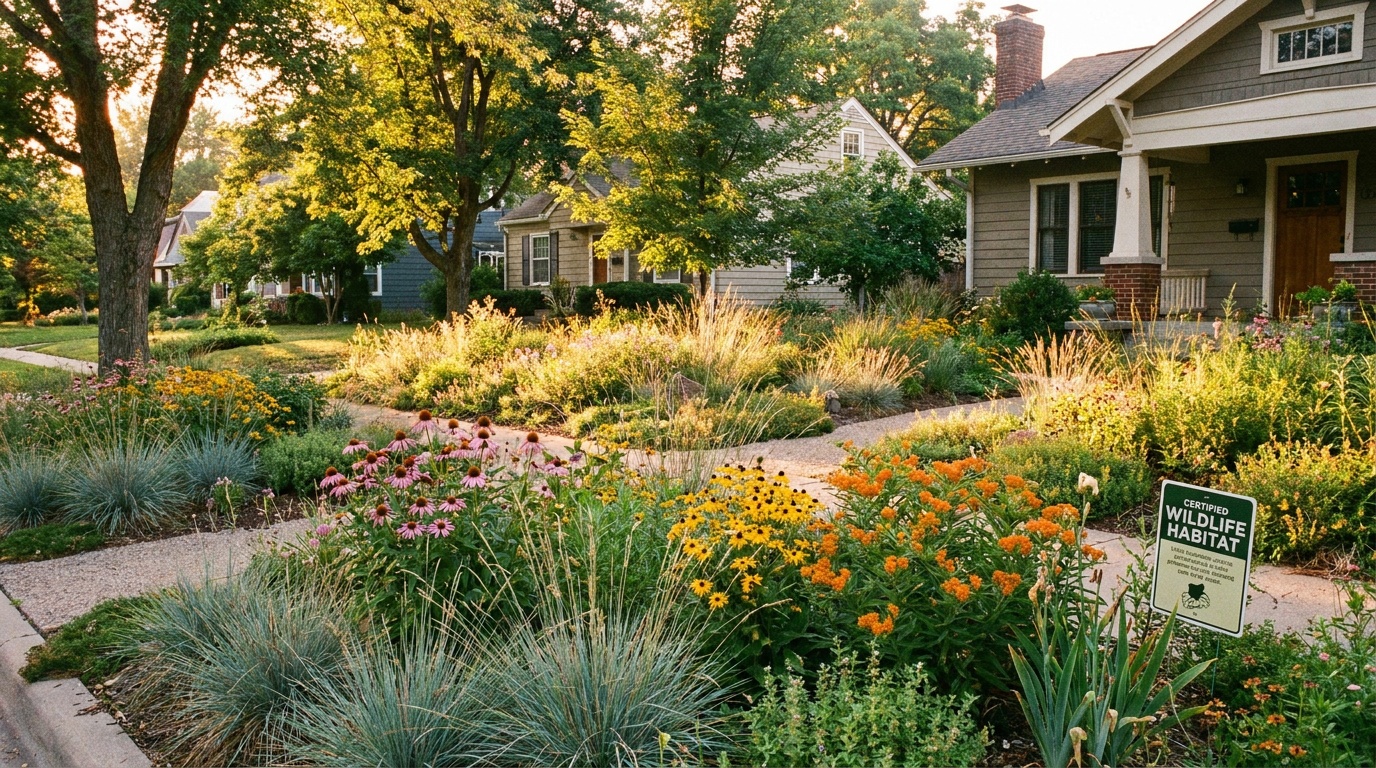
During the establishment phase (typically the first growing season), native grass seedlings are small, sparse, and often visually indistinguishable from actual weeds to the untrained eye. Neighbors may complain. HOA boards may send letters. The solution? Strategic design framing. Install a clear, defined border (metal edging, a decorative fence, or a mown buffer strip) around your native planting area. This signals intentionality. Add a small sign identifying the planting as a “Native Prairie Garden.” Research consistently shows that clearly delineated, labeled native plantings receive far fewer complaints than undefined areas. Many municipalities, including Chicago and Austin, have updated their weed ordinances since 2024 to explicitly exempt registered native plantings from enforcement.
Challenge 2: Weed Competition During Establishment
Invasive annual weeds like crabgrass, foxtail, and lambsquarters can overwhelm native grass seedlings before they get established. The most effective strategy is site preparation before planting. This typically involves solarizing the soil (covering with clear plastic for 6–8 weeks in summer to kill weed seeds) or applying a pre-emergent herbicide specifically approved for use with native plantings. Once native grasses are established, their dense growth habit naturally suppresses most weed competition — but getting to that point requires vigilance in year one.
Challenge 3: Impatience with the Establishment Timeline
There’s a saying among prairie restorationists: “First year it sleeps, second year it creeps, third year it leaps.” Native prairie grasses invest most of their first-year energy in root development rather than visible top growth. This can be deeply discouraging for homeowners used to the instant gratification of sod installation. The fix here is expectation management combined with strategic planting companions: mix native grasses with fast-establishing native wildflowers like Black-eyed Susan or Purple Coneflower. These provide immediate visual interest while your grasses develop their root systems underground.
Getting Started: A Practical Planting Guide
Ready to make the transition? Here’s a practical, step-by-step approach that works whether you’re converting a small front yard or a multi-acre property.
- Assess your site conditions: Before purchasing a single seed or plug, spend time observing your site. Is it full sun, part shade, or deep shade? What’s your soil type — sandy, clay-heavy, loamy? Does water pool in any areas after rain? Native grass selection hinges on honest answers to these questions.
- Choose your installation method: Direct seeding is the most economical option for large areas but requires the most patience. Plug planting (using small, pre-grown starter plants) costs more but establishes faster and is better for smaller, high-visibility areas. For a hybrid approach, seed background areas and use plugs for foreground focal points.
- Prepare your site thoroughly: Remove existing vegetation. For small areas, manual removal or smothering with cardboard and wood chips works well. For larger areas, herbicide application followed by solarization gives the best results.
- Plant at the right time: Warm-season grasses (Big Bluestem, Switchgrass, Buffalo Grass) are best planted in late spring once soil temperatures exceed 60°F. Cool-season natives can be seeded in early fall for spring germination.
- Water strategically during establishment: Yes, even drought-tolerant natives need consistent moisture during their first growing season. Water deeply but infrequently (1–2 times per week) to encourage deep root growth rather than shallow root dependency.
- Maintain with intention: Cut back native plantings once annually in late winter or very early spring (before new growth emerges). This removes dead material, reduces tick habitat, and stimulates vigorous new growth. Leave the cut debris in place as mulch if you’re managing for wildlife.
Pro Tip: Contact your local native plant society or Cooperative Extension office before purchasing plants. In 2026, many states offer cost-share programs that reimburse homeowners for a portion of native planting costs — particularly for properties near waterways or in designated conservation priority areas.
Real-World Case Studies from 2025–2026
Case Study 1: The Minneapolis Suburb Transformation
In 2025, Jennifer Kowalski converted the entire 8,000-square-foot lawn of her Eden Prairie, Minnesota home to a mixed native prairie planting featuring Little Bluestem, Prairie Dropseed, and Indiangrass, interspersed with native wildflowers. By the second growing season (spring 2026), her annual lawn care costs had dropped from approximately $2,400 to under $300 — primarily the cost of a single annual cleanup. Her water bill decreased by an estimated 35% compared to pre-conversion summers. “The neighbors who were skeptical at first are now asking me for advice,” she reports. Three neighboring properties have begun partial conversions as of mid-2026.
Case Study 2: Commercial Campus Goes Native in Austin
A regional technology company in Austin, Texas replaced 12 acres of irrigated Bermuda grass around its campus headquarters with a mix of Buffalo Grass, Sideoats Grama, and native wildflower meadow in a phased project completed in late 2024. By their 2025 annual report, the company documented a 72% reduction in irrigation costs ($180,000 annual savings), elimination of all synthetic fertilizer applications, and a 91% reduction in mowing frequency (from 26 times per year to twice annually). The project also contributed to the company’s ESG reporting metrics, helping them achieve LEED certification for their campus. Local biodiversity surveys conducted in spring 2026 found 34 native bee species using the restored habitat — up from just 6 species documented before the conversion.
Native vs. Conventional Grass: The Numbers
The comparative data below illustrates the measurable differences between a typical conventional turf lawn and a native prairie grass planting across key performance metrics. All figures represent averages for a 5,000 sq ft residential property in a mid-continental climate zone.
| Metric | Conventional Turf Lawn | Native Prairie Planting |
|---|---|---|
| Annual Water Use | 25,000–40,000 gallons | 0–5,000 gallons (after yr 2) |
| Annual Maintenance Cost | $1,200–$3,000 | $150–$400 |
| Mowing Frequency | 20–30 times/year | 1–2 times/year |
| Synthetic Fertilizer Needed | 3–4 applications/year | None required |
| Native Pollinator Species Supported | 1–3 species | 15–40+ species |
Annual Cost Savings: Visual Comparison
Conventional Lawn Annual Cost (~$2,100 avg)
Native Prairie — Year 1 (Est. Cost ~$900)
Native Prairie — Year 2 (~$450)
Native Prairie — Year 3+ (~$275)
Commercial Native Campus (per acre, Year 3+)
*All figures are estimated annual maintenance costs. Initial installation costs are excluded from Year 2+ calculations.
Frequently Asked Questions
Can native prairie grasses work in a suburban HOA setting?
Yes — with strategic planning. The key is intentional design framing. Native grass plantings that include defined borders, clear sight lines, and intentional structure (mown paths, mixed wildflowers, decorative edging) are increasingly accepted by HOA boards, particularly following a wave of bylaw updates across the Sun Belt and Midwest between 2023 and 2025. Before planting, review your HOA’s specific covenants, request a variance if needed, and consider presenting ecological and cost data to your HOA board. Many boards respond positively when residents demonstrate that native plantings reduce community irrigation costs and improve property values. Several studies, including a 2025 report from the National Association of Realtors, found that well-maintained native gardens increased adjacent property values by 5–12%.
How do native grasses perform in shaded or partially shaded yards?
Most prairie grasses are sun-lovers — they evolved in open, treeless landscapes and genuinely need at least 6 hours of direct sun daily to thrive. However, there are notable exceptions. Northern Sea Oats and Pennsylvania Sedge (Carex pensylvanica) perform beautifully in part to full shade and can serve as lawn alternatives under tree canopies where conventional turf struggles equally. For transitional areas (4–6 hours of sun), Wild Rye species (Elymus canadensis or Elymus virginicus) offer a good compromise. The honest advice: match grass species to actual light conditions rather than trying to force sun-adapted prairie species into shaded sites — you’ll be disappointed.
Is burning really necessary for maintaining native prairie plantings?
No — burning is the traditional and arguably most ecologically beneficial management method for prairie landscapes, but it’s absolutely not mandatory for residential or most suburban settings. Annual late-winter mowing (set mower height to 4–6 inches) effectively mimics the reset function of fire for most residential native plantings. It removes accumulated thatch, reduces weed pressure, and stimulates vigorous new growth. If you’re managing a larger rural property and fire is a legal option in your jurisdiction, a prescribed burn every 3–5 years delivers superior results — but for the typical homeowner, a once-a-year mow in late February or early March gets the job done. Some restoration ecologists also recommend leaving portions of the planting unmowed in any given year to preserve overwintering habitat for ground-nesting bees and other beneficial insects.
Your Prairie Transformation Roadmap: Grow Smarter, Not Harder
Here’s what it all comes down to: native prairie grasses aren’t a trend or a compromise — they’re a fundamentally smarter approach to landscaping that aligns the way you manage your outdoor space with the ecological logic of the landscape you actually live in. The savings are real. The beauty is real. The wildlife benefits are real. And in a year when water costs, climate volatility, and ecological responsibility are all converging at once, the timing has never been more compelling.
Here’s your concrete action roadmap for getting started:
- This week: Observe your yard carefully. Note sun exposure, soil drainage, and existing problem areas (bare patches, erosion spots, flooding zones). These are your best planting opportunities.
- Within the next 30 days: Contact your local native plant nursery, botanical garden, or Cooperative Extension office. Ask specifically about locally genetically sourced plants (“local ecotype” selections outperform non-local varieties significantly). Confirm any applicable municipal rebate or cost-share programs.
- This growing season: Start small. Convert a single defined area — a parkway strip, a slope, a difficult corner — rather than attempting a whole-property transformation. A successful 200-square-foot test planting teaches you far more than any article can.
- By next spring (2027): Evaluate and expand. Your first planting will show you what works in your specific microclimate. Use that knowledge to guide phase two of your conversion with confidence.
- Long-term vision: Connect with your neighbors. Some of the most impactful native prairie projects in 2026 are neighborhood-scale initiatives where adjacent properties create connected habitat corridors — multiplying the wildlife and ecological benefits of any single property dramatically.
Key Takeaways:
- Native prairie grasses can reduce annual lawn care costs by 60–80% once established, typically within 2–3 years.
- Deep root systems (up to 15 feet) provide drought tolerance, carbon sequestration, and soil health benefits that conventional turf cannot match.
- Regional species selection is critical — the right native grass for Kansas is not the right choice for Minnesota.
- Establishment challenges are real but manageable with proper site preparation and realistic timeline expectations.
- In 2026, regulatory support, financial incentives, and cultural momentum are all moving in favor of native landscaping.
As urban heat islands expand, water scarcity intensifies, and biodiversity loss accelerates, the choices we make in our own yards become unexpectedly significant contributions to larger ecological systems. Your lawn — or what replaces it — is part of a living landscape that extends far beyond your property line.
So here’s the question worth sitting with: If your yard could work with nature instead of against it — costing you less, requiring less of your time, and doing genuine ecological good in the process — what’s actually holding you back from making the switch?
Article reviewed by Linda Phillips, Senior Architectural Consultant & Renovation Project Manager, on May 4, 2026