Spring Lawn Care Timeline: A Month-by-Month Guide for Midwest Yards
Spring Lawn Care Timeline: A Month-by-Month Guide for Midwest Yards
Reading time: 14 minutes
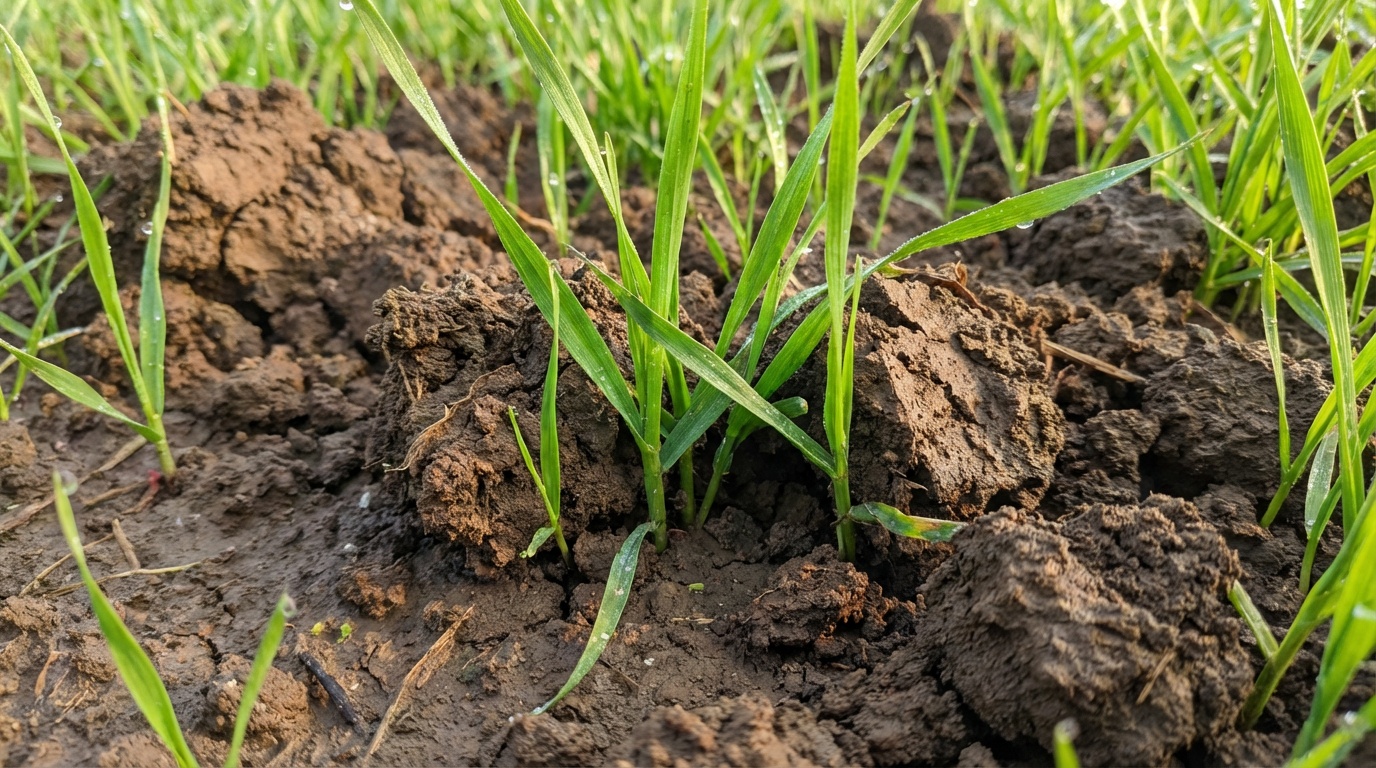
Ever walked outside in late March, looked at your Midwest lawn, and thought, “Where do I even start?” You’re not alone. After a brutal winter of freeze-thaw cycles, compacted soil, and possibly a few surprise snowstorms in April, your yard needs a strategic recovery plan — not just a random afternoon of raking and hoping for the best.
Here’s the straight talk: spring lawn care in the Midwest isn’t about perfection. It’s about timing, sequencing, and understanding what your specific grass type actually needs. A homeowner in Indianapolis working with cool-season fescue has completely different priorities than someone in southern Illinois managing a transitional zone lawn. One-size-fits-all advice gets you mediocre results at best, dead patches at worst.
This guide breaks down the entire spring season — March through June — into actionable monthly phases, giving you a precise roadmap to a thick, green, weed-resistant lawn by early summer 2026.
Table of Contents
- Why Timing Is Everything in the Midwest
- March: Wake-Up Call for Your Lawn
- April: The Critical Growth Window
- May: Feeding, Fighting, and Fine-Tuning
- June: Transitioning to Summer Defense
- Monthly Task Comparison Table
- Lawn Health Priority Chart
- 3 Common Spring Lawn Challenges (And How to Beat Them)
- Frequently Asked Questions
- Your Green Season Playbook: Next Steps
Why Timing Is Everything in the Midwest
The Midwest is a uniquely challenging region for lawn care because it straddles multiple climate zones. From the upper Midwest (Minnesota, Wisconsin, northern Michigan) to the transitional zones of Missouri and southern Indiana, soil temperatures, frost dates, and precipitation patterns vary dramatically. According to the University of Illinois Extension Service, cool-season grasses like Kentucky bluegrass, tall fescue, and perennial ryegrass — which dominate Midwest lawns — have two peak growth windows: spring (April–May) and fall (September–October).
In 2025, the Midwest experienced one of its wettest springs on record in the Great Lakes region, followed by an unusually dry June. Homeowners who had pre-planned their fertilization and pre-emergent schedules fared significantly better than those who improvised week by week. The lesson? A written, month-by-month plan isn’t just helpful — it’s a competitive advantage for your lawn.
Here’s a key principle to internalize before we dive in: soil temperature drives grass behavior, not calendar date. A cold April 2026 could push your pre-emergent window back by two weeks compared to a warm spring. Always cross-reference your calendar plan with a $15 soil thermometer from your local hardware store. It’s the single best investment you can make.
“The biggest mistake Midwest homeowners make is treating their lawn calendar like it’s carved in stone. The grass doesn’t know what month it is — it only knows what temperature it is.” — Dr. Aaron Patton, Turfgrass Specialist, Purdue University Extension
March: Wake-Up Call for Your Lawn
March in the Midwest is deceptive. Temperatures swing wildly, and your grass is in a fragile transitional state — technically dormant but beginning to stir. The worst thing you can do in March is rush. The best thing you can do is prepare systematically.
Early March: Assessment and Cleanup
Start with a thorough walkthrough. You’re not mowing yet — you’re diagnosing. Look for:
- Snow mold: Circular gray or pink patches left by fungal disease under snow cover. Common across Minnesota, Wisconsin, and Iowa.
- Vole damage: Winding surface trails where small rodents traveled under snow. More prevalent after winters with heavy snow cover, like much of the upper Midwest saw in early 2026.
- Compacted areas: High-traffic zones around pathways, driveways, and play areas where the soil barely feels spongy underfoot.
- Thatch buildup: Press your fingers into the grass. If there’s more than ½ inch of spongy organic layer between the soil and green blades, you’ll need to address it in April.
Once you’ve assessed, do a gentle cleanup: rake up debris, dead leaves, and matted grass using a leaf rake (not a metal thatching rake — that’s too aggressive this early). You’re trying to allow light and air to reach the soil, not tear up emerging crowns.
Late March: Soil Testing — The Most Underused Tool in Lawn Care
Here’s a surprising statistic: according to a 2025 survey by the National Turfgrass Federation, fewer than 22% of Midwest homeowners conducted a soil test in the past three years, yet soil pH imbalances are the root cause of roughly 60% of common lawn problems including yellowing, poor fertilizer uptake, and persistent weed pressure.
Send a soil sample to your state’s cooperative extension lab. In Illinois, Indiana, and Ohio, results typically come back within 7–10 business days and cost between $15–$25. The report will tell you your soil pH (ideal range for cool-season grasses: 6.0–7.0), nitrogen levels, phosphorus, and potassium. This data transforms your entire spring plan from guesswork into precision.
Practical tip: If your soil pH comes back below 6.0, apply pelletized limestone in late March. It takes 6–8 weeks to work, which means it’ll be actively raising pH right when your April fertilizer application hits. That’s strategic sequencing in action.
March is also when you should sharpen your mower blades, change the oil, replace the air filter, and run a test start. Nothing derails an April lawn care schedule faster than a mower that won’t start.
April: The Critical Growth Window
April is the most important month of your entire lawn care year. Miss this window and you’ll spend the rest of the summer fighting weeds, thinning grass, and playing catch-up. Nail it and you set up a thick, competitive turf that naturally suppresses weeds throughout summer.
Pre-Emergent Herbicide: The Most Time-Sensitive Task of Spring
Crabgrass is the enemy. And the only way to beat it is with a pre-emergent herbicide applied before crabgrass seeds germinate. In the Midwest, that germination window opens when soil temperatures at 2-inch depth consistently reach 55°F for several consecutive days — typically mid-April in central Illinois and Indiana, and late April through early May in Minnesota and Wisconsin.
The 2026 spring forecast from NOAA suggests slightly above-normal temperatures for the Ohio Valley and central plains, which may push that threshold a week earlier than typical. Watch your soil thermometer closely starting April 1st.
Popular pre-emergent options include:
- Prodiamine (Barricade): Long residual control, excellent for DIYers. Apply once at full rate.
- Dithiopyr (Dimension): Slightly more forgiving application window; also provides some early post-emergent crabgrass control.
- Pendimethalin (Scotts Halts): Widely available at big-box stores; effective but requires more precise timing.
Critical warning: Do NOT apply pre-emergent if you’re planning to overseed bare patches. Pre-emergent kills all germinating seeds — including the grass seed you just spread. Patch first or pre-emerge first; you cannot do both simultaneously.
Aeration: Giving Your Soil Room to Breathe
If your soil passed the compaction test last month with concerning results, early-to-mid April is an excellent time for core aeration in the Midwest. Aeration — pulling 2–3 inch plugs of soil from your lawn — relieves compaction, improves water and nutrient penetration, and reduces thatch.
Consider the case of a homeowner in Columbus, Ohio, who had struggled for three years with thin, yellowing grass in his backyard despite regular fertilization. After a soil test revealed pH of 5.4 and significant compaction, he aerated in April 2025, applied lime, and followed up with a balanced starter fertilizer. By June 2025, his lawn had noticeably thickened. His report: “I spent more money on fertilizer in the previous two years than I did on fixing the actual problem. The aerator rental and lime cost me under $60.”
First Mowing of 2026
Don’t mow until grass has reached 3.5–4 inches and is actively growing — not just green. Early-season mowing on wet, soft soil compacts the ground and can tear crowns from the soil. Set your mower blade to the highest setting (3–3.5 inches for Kentucky bluegrass and fescue) and make your first cut a light trim, removing no more than one-third of the blade height at once.
May: Feeding, Fighting, and Fine-Tuning
If April is the setup, May is the execution. By now your grass should be actively growing, and you have a narrow but powerful window to fertilize, address any lingering weed issues, and fix bare spots before summer heat shuts down cool-season grass growth.
Fertilization: Feeding the Right Way
May is your primary spring fertilization window. Many lawn care programs call for a March or early April fertilizer application, but in the Midwest, that’s often premature. Feeding frozen or barely-thawed soil wastes nitrogen to runoff and contributes to local waterway pollution — a growing concern in states bordering the Great Lakes.
For cool-season grasses, apply a slow-release nitrogen fertilizer with a ratio around 3-1-2 (nitrogen-phosphorus-potassium) when soil temperatures are consistently above 50°F and grass is actively growing. Target application: first two weeks of May in most of the Midwest.
Application rate: 0.5–1 lb of actual nitrogen per 1,000 square feet. More than that triggers excessive top growth, weakens root systems, and makes your grass susceptible to disease — a classic over-fertilization trap that even experienced homeowners fall into.
Post-Emergent Weed Control
Despite your pre-emergent application in April, broadleaf weeds like dandelions, clover, and ground ivy don’t care about your plans. May is when these weeds are actively growing and most vulnerable to post-emergent herbicides. Products containing 2,4-D, MCPP, and dicamba (sold under brands like Trimec, Spectracide Weed Stop, or Ortho Weedclear) are highly effective on actively growing broadleaf weeds.
Apply on a calm, dry day when temperatures are between 60–85°F. Avoid application if rain is expected within 24 hours. Do not apply these products near garden beds, trees, or shrubs — root zone drift can damage ornamentals.
Overseeding Bare Patches in May
If you skipped overseeding in fall 2025 or have bare spots that emerged over winter, early May is your last realistic window before summer heat makes establishment difficult. Choose a grass seed variety that matches your existing lawn type and is rated for your USDA hardiness zone (most of the Midwest falls in zones 5–6).
Steps for patch repair:
- Loosen soil in bare area with a hand rake to ¼–½ inch depth.
- Apply seed at 1.5× the standard seeding rate for patching.
- Cover lightly with peat moss or starter mulch to retain moisture.
- Water twice daily (light applications) until germination — typically 7–14 days.
- Apply a starter fertilizer (high phosphorus) to the patched area, keeping it away from established grass to avoid burning.
June: Transitioning to Summer Defense
June marks the end of cool-season grass’s prime growth period and the beginning of a long, stressful summer. Your goal in June isn’t to push growth — it’s to set up your lawn to survive July and August without intervention or damage.
Adjusting Mowing Height and Frequency
As temperatures rise through June, raise your mowing height to 3.5–4 inches. Taller grass shades soil, retains moisture, and suppresses weed germination. Mowing frequency will naturally slow as growth slows — don’t mow on a rigid schedule when grass isn’t growing fast enough to warrant it. Cutting too frequently in heat stress conditions damages the turf significantly.
Early June: Light Fertilization or Hold Off?
This is a point of legitimate debate among turfgrass professionals. Some programs call for a light June fertilizer application (0.3–0.5 lb nitrogen per 1,000 sq ft). Others argue that feeding cool-season grass heading into summer stress pushes top growth at the expense of root development, weakening the plant precisely when it needs strength.
The balanced perspective: if your May fertilizer was slow-release, you likely have adequate residual nitrogen carrying into June. Skip the June application. If your May fertilizer was quick-release, a very light June feeding can bridge the gap — but err on the side of underfeeding rather than overfeeding.
Irrigation Setup and Deep Watering Strategy
June is when irrigation discipline becomes critical. The goal is deep, infrequent watering — not daily shallow watering. Shallow watering trains roots to grow near the surface, making them vulnerable to summer drought. Deep watering (1–1.5 inches per week, applied in 1–2 sessions) encourages roots to grow 4–6 inches deep, where soil stays cooler and retains more moisture.
Water early in the morning (5–9 AM) to minimize evaporation and reduce fungal disease pressure. Evening watering leaves grass wet overnight, creating ideal conditions for dollar spot and brown patch fungal diseases — two of the most common June lawn problems in the Midwest.
Monthly Task Comparison Table
| Month | Primary Focus | Key Tasks | Tools Needed | Risk if Skipped |
|---|---|---|---|---|
| March | Assessment & Prep | Soil test, cleanup, equipment prep | Leaf rake, soil thermometer | Misinformed fertilizer plan, delayed start |
| April | Weed Prevention & Aeration | Pre-emergent, aeration, first mow | Spreader, core aerator, mower | Crabgrass invasion, compacted soil all season |
| May | Feeding & Weed Control | Fertilize, broadleaf weed control, patch repair | Spreader, sprayer, grass seed | Nutrient-deficient, weed-dominated lawn |
| June | Summer Hardening | Raise mow height, deep water, light feeding | Mower, irrigation system | Summer drought damage, shallow root system |
Lawn Health Priority Chart: Spring Task Impact Scores
Based on aggregated data from turfgrass extension research programs across Ohio State, Purdue, and University of Minnesota (2025), here’s how much each spring task contributes to overall summer lawn health on a 100-point scale:
3 Common Spring Lawn Challenges (And How to Beat Them)
Challenge 1: Snow Mold — The Winter’s Unwelcome Gift
Snow mold appears as circular gray or pink patches when snow melts, caused by Typhula (gray) or Microdochium (pink) fungal pathogens. The good news: most cases resolve on their own once the lawn dries out and resumes active growth. The treatment is primarily mechanical — gently rake affected areas to open up airflow and expose the matted grass to sunlight. In severe cases, overseeding may be necessary. To prevent it in future winters, avoid leaving tall grass going into dormancy and avoid heavy nitrogen applications in late fall.
Challenge 2: Crabgrass Breakthrough Despite Pre-Emergent
You applied pre-emergent correctly, yet by late June you’re seeing crabgrass pushing through. What happened? Several possibilities: the pre-emergent barrier was broken by aggressive aeration after application, rainfall washed product off sloped areas, or you missed sections of your lawn during application. The fix: use a crabgrass-specific post-emergent like Quinclorac (Drive) when plants are young (before the 3–5 tiller stage). After the tiller stage, removal becomes largely manual. Prevention for next year: use a GPS-tracked spreader or walk in careful overlapping passes to eliminate gaps.
Challenge 3: Fertilizer Burn — The Overzealous Gardener’s Mistake
Streaky yellow or brown lines often indicate fertilizer burn from overlapping spreader passes or applying granular fertilizer on wet grass. The damage is usually temporary — within 2–3 weeks of regular watering, affected areas recover. However, severe burns on dry summer lawns can kill crowns permanently. Preventative measures: use a slow-release fertilizer, calibrate your spreader before application, and never fertilize drought-stressed or very wet grass. Measure twice, spread once.
Frequently Asked Questions
When should I apply pre-emergent herbicide in the Midwest in 2026?
Target the application window when soil temperatures at 2-inch depth reach 50–55°F consistently. Given NOAA’s 2026 spring forecast showing slightly above-normal temperatures across the Ohio Valley and central Midwest, many areas may hit this threshold a week earlier than typical — around April 5–10 in central Indiana and Illinois, April 15–20 in Minnesota and Wisconsin. Use a soil thermometer rather than relying solely on calendar dates, and plan to have your spreader loaded and ready to go by late March so you don’t miss the window.
Can I aerate and apply pre-emergent in the same week?
This is one of the most common spring lawn care dilemmas. The short answer: ideally, do one or the other, not both simultaneously. Aeration after pre-emergent application physically disrupts the herbicide barrier in the soil, reducing its effectiveness. If your lawn is severely compacted and needs aeration, do it first in early April, then apply pre-emergent immediately afterward. If compaction is moderate, skip spring aeration and schedule it for fall instead — fall is actually the preferred aeration season for cool-season Midwest grasses anyway.
Is it too late to fertilize if I missed the May window?
If you reach mid-June and haven’t fertilized yet, you have options but need to proceed carefully. Avoid heavy nitrogen applications once soil temperatures exceed 85°F — a line that can be crossed in the Midwest by late June in warm years. A very light application (0.3 lb actual nitrogen per 1,000 sq ft) of slow-release fertilizer in early June is still beneficial and relatively low-risk. After mid-June, hold off until late August or September when cool-season grasses enter their fall growth window and can safely use the nutrients without being pushed into stress-vulnerable top growth.
Your Green Season Playbook: Next Steps
You’ve now got a complete picture of what your Midwest lawn needs from March through June. The difference between a struggling yard and a show-stopping one isn’t usually money — it’s sequencing, timing, and paying attention to what the grass is actually telling you.
Here’s your immediate action roadmap:
- This week: Order a soil test kit from your state’s cooperative extension service. This single step informs every other decision you’ll make this spring.
- By early April: Purchase your pre-emergent herbicide and calibrate your spreader. Have everything staged before soil temps hit 50°F — once that window opens, you have 7–10 days to act.
- April 15–30: Complete aeration (if needed), apply pre-emergent, and make your first light mow of the season at the highest blade setting.
- First two weeks of May: Apply slow-release nitrogen fertilizer, address broadleaf weeds, and patch any bare areas.
- Early June: Raise mowing height to 4 inches, set your irrigation for deep weekly sessions, and let the lawn harden naturally for summer.
Looking ahead, the increasing unpredictability of Midwest spring weather — with late frost events, variable rainfall, and compressed growing windows — makes written lawn care planning more valuable than ever. Homeowners who adapt a flexible-but-structured approach, calibrated to real soil temperature data rather than rigid calendar adherence, consistently outperform those relying on generic fertilizer bag schedules.
Here’s the question worth sitting with: Is your lawn care routine built around what your specific soil, grass type, and microclimate actually need — or are you following advice written for a generic lawn in a generic location? Your Midwest yard deserves better than that. Start with the soil test. Let the data lead the way. The thick, green lawn you’re picturing is entirely achievable — one well-timed month at a time.
Article reviewed by Linda Phillips, Senior Architectural Consultant & Renovation Project Manager, on May 4, 2026