Sloped Backyard Landscaping: Best Practices for Erosion Control
Sloped Backyard Landscaping: Best Practices for Erosion Control
Reading time: 14 minutes
Does your backyard slope feel more like a liability than an asset? You’re watching topsoil wash away after every rainstorm, your garden beds are slowly migrating downhill, and that muddy runoff is creeping toward your foundation. Sound familiar? You’re definitely not alone — and the good news is, this is a solvable problem with the right strategy.
Sloped landscapes are among the most challenging environments homeowners face, but they’re also some of the most rewarding to transform. In 2026, with increasingly unpredictable rainfall patterns and more intense storm events across North America and Europe, erosion control isn’t just an aesthetic concern — it’s a financial and environmental imperative. According to the American Society of Landscape Architects’ 2025 Annual Report, erosion-related property damage costs U.S. homeowners an estimated $8.7 billion annually, a figure that has climbed 23% over the past five years.
This guide walks you through everything you need to know: from understanding why slopes erode to implementing layered, sustainable solutions that actually work.
Table of Contents
- Why Slopes Erode (And Why It Gets Worse)
- Assessing Your Slope: Know Before You Grow
- Plant-Based Erosion Control: Nature’s Best Defense
- Hardscape Solutions: Terraces, Walls, and Swales
- Ground Covers and Mulching Techniques
- Drainage Systems That Actually Work
- Erosion Control Methods: Comparative Overview
- Effectiveness of Erosion Control Methods (Chart)
- Frequently Asked Questions
- Your Slope Transformation Roadmap
Why Slopes Erode (And Why It Gets Worse)
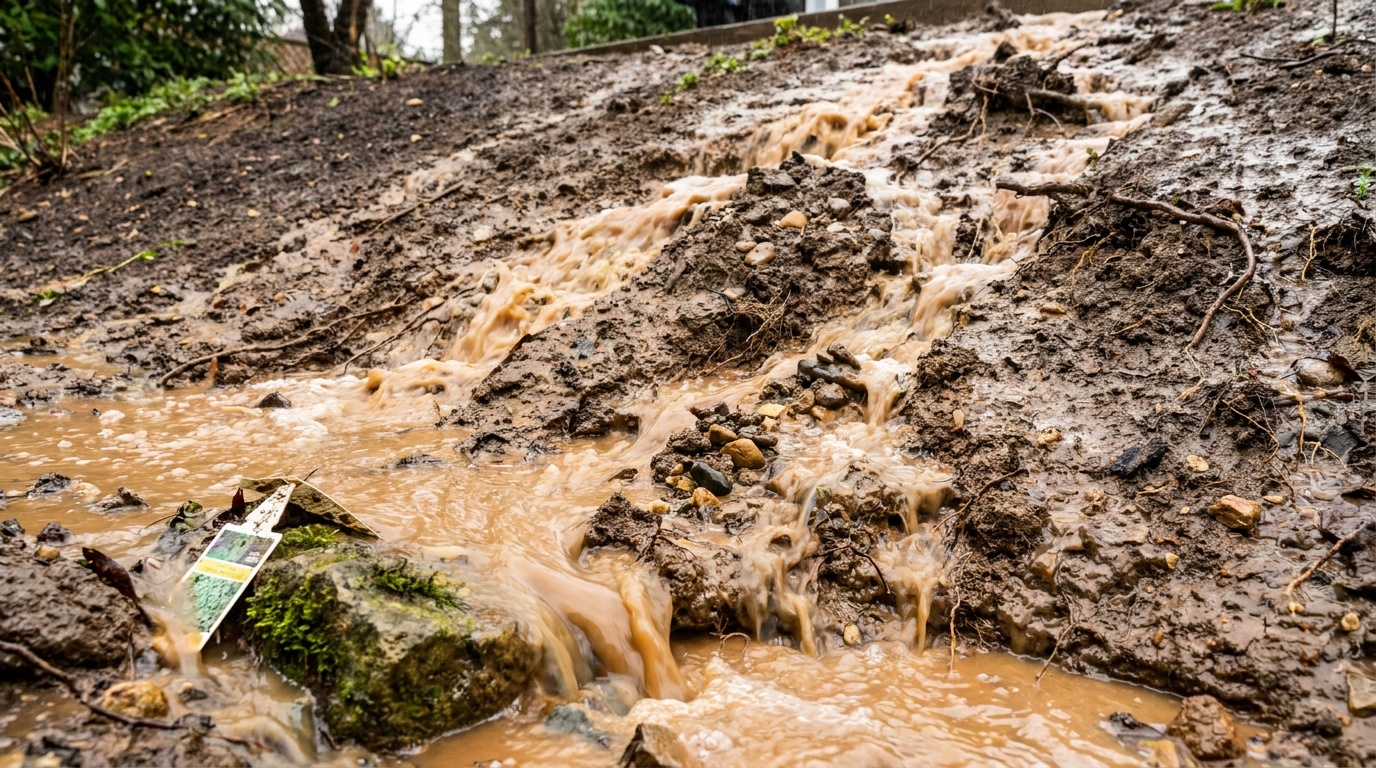
Erosion is gravity working with water to move soil particles from one place to another. On a sloped backyard, rainwater hits the surface with kinetic energy, loosens soil particles, and carries them downhill in a process called sheet erosion. Over time, small channels called rills form, and if left unaddressed, those rills deepen into gullies that are expensive and difficult to repair.
Here’s what accelerates the problem in modern suburban settings:
- Compacted soil from construction: New builds often strip away topsoil and leave behind dense subsoil that repels water rather than absorbing it.
- Loss of deep-rooted vegetation: Lawns have shallow roots — typically 2 to 4 inches — compared to native shrubs or trees that anchor soil 3 to 10 feet deep.
- Increased impervious surfaces: Driveways, patios, and rooftops funnel concentrated water onto slopes.
- Climate volatility: In 2025, the NOAA recorded a 17% increase in high-intensity rainfall events across the continental U.S. compared to the 2010–2020 average — and 2026 forecasts suggest this trend is continuing.
Understanding the type of erosion your slope experiences is critical. Sheet erosion is slow and often invisible until it’s severe. Rill erosion is visible as small channels. Gully erosion is dramatic and structural. Each requires a slightly different intervention strategy.
Assessing Your Slope: Know Before You Grow
Before you plant a single seed or haul in one boulder, you need a clear picture of what you’re working with. Landscape professionals use a simple formula: rise over run, expressed as a percentage. A slope that rises 3 feet over a horizontal distance of 10 feet has a 30% grade.
Slope Categories and What They Mean
Your slope grade fundamentally determines which solutions are feasible, affordable, and sustainable:
- Under 10% (gentle slope): Most planting and lawn techniques work well. Minimal intervention needed.
- 10–25% (moderate slope): Ground covers, shrubs, and light terracing are recommended. Lawn mowing becomes difficult and often impractical.
- 25–40% (steep slope): Hardscape retaining walls, deep-rooted native plants, and erosion control blankets become essential.
- Over 40% (very steep): Engineering consultation is strongly advised. Gravity is working hard against you — structural solutions are non-negotiable.
How to Measure Your Slope at Home
You don’t need expensive equipment. Here’s a quick DIY method:
- Drive a stake at the top of your slope and one at the bottom, connected by a string pulled taut and level.
- Measure the vertical distance from the string to the ground at the bottom stake — that’s your rise.
- Measure the horizontal distance between the two stakes — that’s your run.
- Divide rise by run, then multiply by 100 to get your slope percentage.
Also note your soil type. Clay soils retain moisture but crack when dry, creating runoff channels. Sandy soils drain quickly but have poor cohesion. Loamy soils are ideal but often depleted on eroded slopes. A simple soil test kit (available at most garden centers for under $20) will give you pH and texture readings that influence plant selection.
Quick Scenario: Imagine you’ve just moved into a suburban home in the Pacific Northwest. Your backyard has a 28% grade with clay-heavy soil. After two rainy seasons, you notice a 4-inch rill forming near the fence line. This is precisely the scenario where a layered approach — native plantings, a dry-stack stone wall, and a French drain — will deliver the best long-term results. Let’s build out exactly what that looks like.
Plant-Based Erosion Control: Nature’s Best Defense
Plants are the most sustainable and often most cost-effective erosion control solution available. Their roots physically bind soil particles together, their canopy intercepts rainfall (reducing its impact energy), and their organic matter improves soil structure over time. But not all plants are created equal for this purpose.
Best Plants for Erosion Control on Slopes
The key criteria for erosion-control plants are: deep or spreading root systems, fast establishment, tolerance for drought and wet conditions, and low maintenance once established.
Here are the top performers by region as of 2026:
- Creeping Juniper (Juniperus horizontalis): Excellent for sunny slopes in USDA zones 3–9. Spreads aggressively, roots deeply, and tolerates poor soils. A 2025 USDA study found it reduced surface erosion by up to 78% on moderate slopes within two growing seasons.
- Native Prairie Grasses (Switchgrass, Little Bluestem): Root systems extend 5–8 feet deep, making them extraordinarily effective on steep grades. Their dormant winter appearance can be a drawback for some homeowners, but their ecological value is unmatched.
- Crown Vetch (Coronilla varia): Fast-spreading, nitrogen-fixing legume. Effective but aggressive — use carefully, as it can spread beyond your property boundaries. Now considered invasive in several mid-Atlantic states.
- Willow shrubs (Salix spp.): Ideal for wet or riparian slopes. Their roots are among the fastest-growing in the plant kingdom, actively seeking and stabilizing moisture-rich soil.
- Groundcover Roses (Rosa ‘Flower Carpet’ varieties): Aesthetically appealing, with thorny canes that slow water flow and roots that anchor well. Zones 4–10.
- Native Ferns: Perfect for shaded slopes in the Eastern U.S. and Pacific Northwest. Their fibrous root systems create a dense underground mat.
Case Study — Denver, Colorado (2024–2025): A homeowner in the Platt Park neighborhood faced a 32% grade backyard that was losing an estimated 2 inches of topsoil per year. After consulting with a local landscape architect, they installed a combination of Blue Grama grass, native rabbitbrush, and three-leaf sumac. Within 18 months, surface erosion was reduced by over 85%, and the slope transformed into a low-water, wildlife-friendly habitat that actually added to the property’s appraised value.
Planting Techniques for Sloped Terrain
Even the right plants will fail if installed incorrectly on a slope. Follow these best practices:
- Stagger plantings in a triangular pattern rather than straight rows — this slows water flow in multiple directions.
- Create individual planting terraces (small flat spots) for each plant using a mattock or hoe. This prevents direct runoff around the root ball before it establishes.
- Install erosion control blankets (jute netting or coir matting) around newly planted areas. These biodegradable fabrics protect bare soil while plants establish — typically 6–18 months.
- Water deeply but infrequently after planting to encourage deep root development. Daily shallow watering creates shallow roots that offer poor erosion protection.
Hardscape Solutions: Terraces, Walls, and Swales
When slopes exceed 25%, or when you want to create functional outdoor living space from a challenging grade, hardscape solutions become not just helpful but essential. The key is integrating them with your planting plan rather than treating them as standalone fixes.
Retaining Walls: Materials and Methods
A retaining wall intercepts the downhill movement of soil by creating a vertical face that holds the grade in place. The material you choose affects cost, longevity, aesthetics, and drainage performance:
- Dry-stack natural stone: Beautiful and highly permeable (water moves through gaps). Best for walls under 3 feet. No mortar required. Cost: $25–$45 per square face foot in 2026.
- Segmental concrete blocks (e.g., Allan Block, Versa-Lok): Engineered for stability, widely available, and DIY-friendly. Best for walls 2–6 feet. Cost: $15–$30 per square face foot.
- Timber/railroad tie walls: Less expensive upfront but prone to rot. Treated timber walls typically last 15–20 years. Not recommended for walls over 4 feet due to structural limitations.
- Poured concrete or concrete block: Maximum structural integrity for walls over 4 feet. Requires professional engineering. Cost: $40–$80+ per square face foot.
- Gabion walls: Wire mesh baskets filled with rock. Highly permeable, visually interesting, and increasingly popular in 2026 sustainable landscaping design. Cost: $20–$40 per square face foot.
Critical note: Any wall over 4 feet tall typically requires a building permit in most U.S. jurisdictions. In 2025, several municipalities updated their codes to require permits starting at 3 feet — check your local regulations before breaking ground.
Terracing: Converting Slope to Usable Space
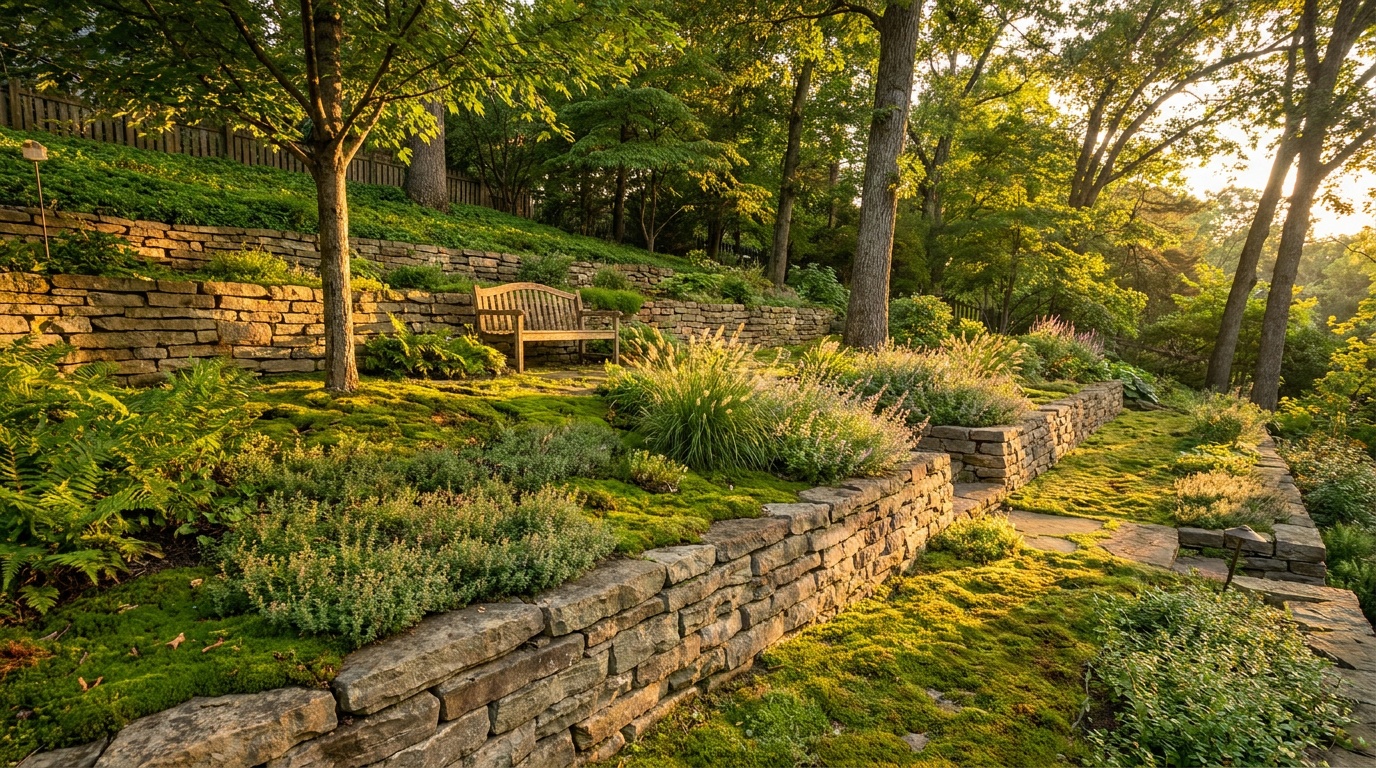
Terracing divides a long slope into a series of flat “steps,” each retained by a wall or edge. This is arguably the most transformative erosion control strategy because it turns a problem area into usable garden beds, seating areas, or even lawn space. The math is straightforward: each terrace level reduces the effective slope of your yard dramatically.
A 30% grade terraced into three equal levels, each with a 2-foot retaining wall, reduces the effective slope on each terrace to near zero. Rainwater now pools and infiltrates on each level rather than sheeting downhill with destructive velocity.
Swales and Berms: Working With Water Flow
A swale is a shallow channel designed to redirect and slow water movement across a slope. Unlike a drain that removes water, a swale guides it to where it can safely infiltrate or be discharged. A berm is a raised mound of soil used to redirect water flow or create a level planting bed on a slope.
Together, swales and berms form the foundation of permaculture water management — a design philosophy that gained significant mainstream traction in 2025 and 2026 as homeowners began treating water as a resource rather than a problem to drain away.
Ground Covers and Mulching Techniques
Between plants, bare soil is the enemy. Even well-established planting schemes have gaps, and those gaps are where erosion starts. Ground covers — both living and inorganic — are your second line of defense.
Organic mulches like shredded hardwood bark, wood chips, or pine straw decompose over time, enriching the soil. On slopes, they need to be applied 3–4 inches deep and ideally held in place with erosion control netting. Pine straw is particularly excellent on slopes because it “knits” together and resists displacement better than chunky bark mulch.
Hydraulic erosion control mulch (HECM) — essentially a slurry of mulch, tackifiers, and sometimes seed sprayed onto bare slopes — has become increasingly popular in both commercial and residential applications. In 2026, residential-grade spray systems are now available for rental at many garden centers, making this technology accessible to homeowners with slopes over 1,000 square feet.
Inorganic ground covers like river rock, decomposed granite, or gravel offer permanent solutions in dry climates. They don’t decompose, suppress weeds effectively, and can create elegant aesthetic statements. However, they don’t improve soil health and can heat up in direct sun, limiting the plants you can grow nearby.
Drainage Systems That Actually Work
Even perfect vegetation and hardscape won’t eliminate the need for thoughtful drainage on moderate-to-steep slopes. The goal is to intercept excess water before it gains the velocity to cause damage, and route it safely away from foundations and property boundaries.
French drains remain the gold standard for subsurface drainage. A perforated pipe wrapped in filter fabric, buried in a gravel trench, intercepts groundwater moving laterally through the soil and redirects it to a daylight outlet or dry well. Cost in 2026: $12–$25 per linear foot installed professionally, or $4–$8 DIY.
Channel drains (surface drains with grated tops) are effective where water concentrates on hard surfaces or along the base of retaining walls. They intercept surface runoff before it erodes planting beds below.
Dry creek beds combine aesthetic appeal with functional drainage. A lined channel filled with river rock carries storm water down slope in a naturalistic, visually appealing way. They’re one of the most searched landscaping features in 2026, according to the Houzz Platform Trends Report, and for good reason — they’re beautiful, effective, and manageable as DIY projects.
Case Study — Austin, Texas (2025): A homeowner in the Travis Heights neighborhood had a 22% grade backyard that flooded their patio area during the intense Central Texas rainfall events of Spring 2025. A landscape contractor installed a combination of two dry creek beds and a French drain running along the base of their cedar fence. The following fall rainy season, the patio remained dry, the slope showed zero new erosion, and the dry creek beds were praised by neighbors and a local garden tour.
Erosion Control Methods: Comparative Overview
Choosing the right approach depends on your slope grade, budget, timeline, and aesthetic goals. Here’s a practical comparison of the primary methods:
| Method | Best Slope Grade | Cost (2026 Avg.) | Time to Effectiveness | Maintenance Level |
|---|---|---|---|---|
| Native Ground Cover Plants | 10–35% | $2–$6 per sq ft | 1–2 growing seasons | Low (after establishment) |
| Retaining Wall (Concrete Block) | 25–50%+ | $15–$30 per sq ft | Immediate | Very Low |
| Erosion Control Blanket + Seed | 15–40% | $1–$3 per sq ft | 30–60 days (seed germination) | Low–Medium |
| French Drain System | Any grade with drainage issues | $12–$25 per linear ft | Immediate | Low (annual inspection) |
| Terracing with Planted Beds | 20–45% | $20–$50 per sq ft | Immediate (structural) + 1 season (plants) | Medium (garden maintenance) |
Erosion Reduction Effectiveness by Method
Based on aggregated data from the Journal of Soil and Water Conservation (2025) and USDA field studies, here’s how the primary erosion control methods compare in terms of surface soil loss reduction over a two-year period:
Erosion Reduction Effectiveness (2-Year Average, % Reduction in Soil Loss)
Note: Combined layered approaches (e.g., retaining walls + native plants + mulch) consistently outperform any single method, achieving 95%+ erosion reduction in controlled studies.
Common Challenges and How to Overcome Them
Challenge 1: Erosion Under and Behind Retaining Walls
One of the most common failures in DIY retaining walls is insufficient drainage behind the wall. When water pressure builds in saturated soil, it pushes walls outward — a process called hydrostatic pressure. The solution is a 6–12 inch gravel backfill layer immediately behind the wall, combined with a perforated drain pipe at the wall’s base that outlets to daylight. Never skip this step, regardless of how small the wall appears.
Challenge 2: Plants Washing Out Before They Establish
The most vulnerable period for any erosion control planting is the first growing season, before roots have developed sufficiently. Protect new plantings with erosion control blankets (jute or coir), install temporary silt fencing at the base of the slope to catch any displaced soil, and water during dry spells to encourage root development rather than stress responses. If you’re planting in fall, some roots will establish before winter dormancy even though you won’t see above-ground growth.
Challenge 3: Neighbor and Stormwater Regulations
In 2026, an increasing number of municipalities have adopted stormwater management ordinances that prohibit redirecting drainage onto adjacent properties. Before installing any drainage solution, confirm that your discharge point is on your own property or into an approved public drainage easement. Many HOAs have also updated their landscaping guidelines in 2025–2026 to specify approved retaining wall materials and heights. A 30-minute conversation with your local planning department can save you thousands in fines and mandatory removal costs.
Frequently Asked Questions
What is the single most important thing I can do to stop my sloped backyard from eroding?
If you can only do one thing, establish deep-rooted vegetation. Bare soil is always the highest-risk erosion scenario. Even a temporary cover crop or erosion control blanket with fast-germinating grass seed dramatically reduces soil loss while you plan a more comprehensive solution. Long-term, native shrubs and grasses with extensive root systems outperform every synthetic or structural intervention when it comes to sustained, low-maintenance erosion control.
How much does professional sloped backyard landscaping typically cost in 2026?
Costs vary significantly by slope severity, scope, and region. For a moderate slope (15–25% grade) with a combination of plantings, mulch, and erosion control fabric, expect to pay $5,000–$15,000 for a professionally installed solution on a typical suburban backyard (2,000–3,000 sq ft). Adding a segmental retaining wall increases costs to $15,000–$40,000+ depending on wall length and height. DIY approaches using native plant material and erosion control blankets can achieve excellent results for $500–$2,500 for the same area, with the main investment being time and physical labor.
Can I use regular lawn grass on my sloped backyard for erosion control?
Standard turf grasses like Kentucky bluegrass or Bermuda provide some erosion protection on gentle slopes under 15%, but they’re poorly suited to steeper grades. Their shallow root systems (2–4 inches) offer limited soil anchoring, they’re difficult or dangerous to mow on steep slopes, and they require significant irrigation and maintenance. In 2026, most landscape professionals recommend transitioning slopes over 20% away from turf entirely, replacing it with native ground covers, ornamental grasses, or shrub plantings that deliver superior erosion control with far less ongoing maintenance and water use.
Your Slope Transformation Roadmap: From Erosion to Elegance
Here’s the straight talk: transforming a sloped, eroding backyard isn’t something that happens overnight — but with a clear sequence of actions, it’s entirely achievable. As climate patterns continue intensifying through 2026 and beyond, homeowners who invest in proper erosion control are protecting not just their soil, but their property values, their foundations, and their peace of mind.
Here’s your actionable roadmap to get started immediately:
- This week — Assess and document: Measure your slope grade using the stake-and-string method. Photograph existing erosion damage. Get a $15 soil test from your garden center. Check your local municipality’s stormwater and retaining wall permit requirements.
- Within 30 days — Stop the bleeding: Install erosion control blankets on any actively eroding bare soil. Add temporary silt fencing at the slope base. Apply a 4-inch layer of organic mulch in gaps between existing plants.
- This planting season — Build your plant foundation: Select and install native ground covers or shrubs appropriate for your region, slope grade, and sun exposure. Plant in the triangular stagger pattern with individual planting terraces. Water deeply to establish.
- Year one — Add structural solutions where needed: If your slope exceeds 25%, engage a landscape contractor or architect for retaining wall or terracing design. Install any necessary drainage (French drain, dry creek bed) before the next rainy season.
- Ongoing — Monitor and adapt: Inspect your slope after every significant rainfall in the first two years. Look for new rill formation, mulch displacement, or wall movement. A proactive $200 repair after a storm is infinitely preferable to a $20,000 remediation project after years of neglect.
The broader trend here is significant: in 2026, residential landscape design is increasingly intersecting with stormwater management policy, climate adaptation strategy, and ecological restoration. Your backyard slope isn’t just a personal challenge — it’s part of a watershed. Every gallon of rainwater you infiltrate on-site rather than shedding as runoff benefits your community’s water quality and reduces pressure on municipal drainage infrastructure.
So here’s a question worth sitting with as you look out at your sloped backyard: Are you ready to stop seeing that slope as a problem and start seeing it as one of the most interesting design opportunities in your entire property? With the right approach, what was your backyard’s biggest liability can become its most striking feature — a terraced garden, a native habitat, a dry creek that sings with every rainstorm. The tools, plants, and knowledge are all available to you right now. The first step is simply deciding to begin.
Article reviewed by Linda Phillips, Senior Architectural Consultant & Renovation Project Manager, on May 4, 2026