Best Backyard Cooling Solutions for Summer Parties Without AC
Best Backyard Cooling Solutions for Summer Parties Without AC
Reading time: 12 minutes
You’ve planned everything perfectly — the playlist, the menu, the guest list. Then summer arrives, and your backyard transforms into something resembling a slow-cooker on high. Sound familiar? Hosting an outdoor party during peak summer heat is one of those challenges that sneaks up on even the most prepared hosts. And in 2026, with average temperatures in many U.S. cities hitting record highs for the third consecutive summer, this problem isn’t going away anytime soon.
Here’s the straight talk: you don’t need central air conditioning to keep your guests comfortable outdoors. What you need is a strategic, layered approach to cooling — one that combines smart technology, clever design, and a few old-school tricks that actually work. This guide breaks down the best backyard cooling solutions available in 2026, so your summer parties stay legendary for all the right reasons.
Table of Contents
- Why Outdoor Cooling Matters More Than Ever in 2026
- Evaporative Cooling: The Unsung Hero of Outdoor Comfort
- Misting Systems — The Gold Standard for Backyard Parties
- Strategic Shade Structures That Do Heavy Lifting
- Portable Fans and Air Circulators Worth the Investment
- Water Features and Cooling Stations
- Head-to-Head: Cooling Solution Comparison
- Cooling Effectiveness by Solution
- Common Challenges and How to Beat Them
- Frequently Asked Questions
- Your Summer Party Cooling Playbook: Next Steps
Why Outdoor Cooling Matters More Than Ever in 2026
According to the National Oceanic and Atmospheric Administration (NOAA), the summer of 2025 ranked as the second hottest on record globally, with heat indices in cities like Phoenix, Dallas, and Atlanta exceeding 110°F for extended stretches. In 2026, climate scientists project that three out of every five summer days in the American South will carry a “dangerous” heat index — a threshold that begins at 103°F.
But this isn’t just an American problem. Across Europe and Australia, summer 2026 has already brought multiple heat advisories, and backyard entertaining culture is adapting fast. A 2025 survey by the Outdoor Lifestyle Research Group found that 74% of hosts reported cutting outdoor parties short due to excessive heat, with heat discomfort ranking as the number one party-killer, above rain and insects.
The good news? A coordinated cooling strategy can reduce the perceived temperature in your outdoor space by anywhere from 10°F to 30°F, depending on the methods used. That’s the difference between guests excusing themselves early and guests who stay for seconds on dessert.
The Real Cost of Doing Nothing
Beyond comfort, there’s a genuine health dimension here. Heat exhaustion can develop surprisingly quickly in humid conditions, especially among older guests, children, and anyone who has had even a couple of drinks. The CDC estimates that heat-related illnesses affect roughly 600,000 Americans annually during peak summer months, and the majority of those incidents happen in outdoor settings without adequate cooling infrastructure. Knowing how to cool your outdoor space isn’t just about hospitality — it’s about responsibility.
Evaporative Cooling: The Unsung Hero of Outdoor Comfort
Before we dive into hardware, let’s understand the science working in your favor. Evaporative cooling is the process by which water absorbs heat from the surrounding air as it evaporates, resulting in a measurable temperature drop. This principle powers everything from swamp coolers to misting fans, and when deployed correctly outdoors, it’s remarkably effective — particularly in low-humidity climates.
In dry regions like the American Southwest or Mediterranean Europe, evaporative cooling can drop air temperatures by 15°F to 30°F. In more humid climates (Southeast U.S., Southeast Asia, parts of Australia), the effect is smaller — roughly 5°F to 15°F — but combining evaporative methods with shade and airflow still produces a dramatic difference in comfort.
Why Evaporative Solutions Beat Traditional AC Outdoors
Central air conditioning works by cycling indoor air through a refrigerant system. Outdoors, that approach is essentially impossible — you’d be trying to cool the entire atmosphere. Evaporative methods, by contrast, cool the air immediately around your guests through localized water evaporation, which is exactly what’s needed in an open-air setting. They’re also dramatically more energy-efficient, consuming up to 75% less electricity than comparable air conditioning units.
This is why smart hosts in 2026 are layering evaporative solutions with structural shade and circulation strategies, rather than hunting for outdoor AC workarounds.
Misting Systems — The Gold Standard for Backyard Parties
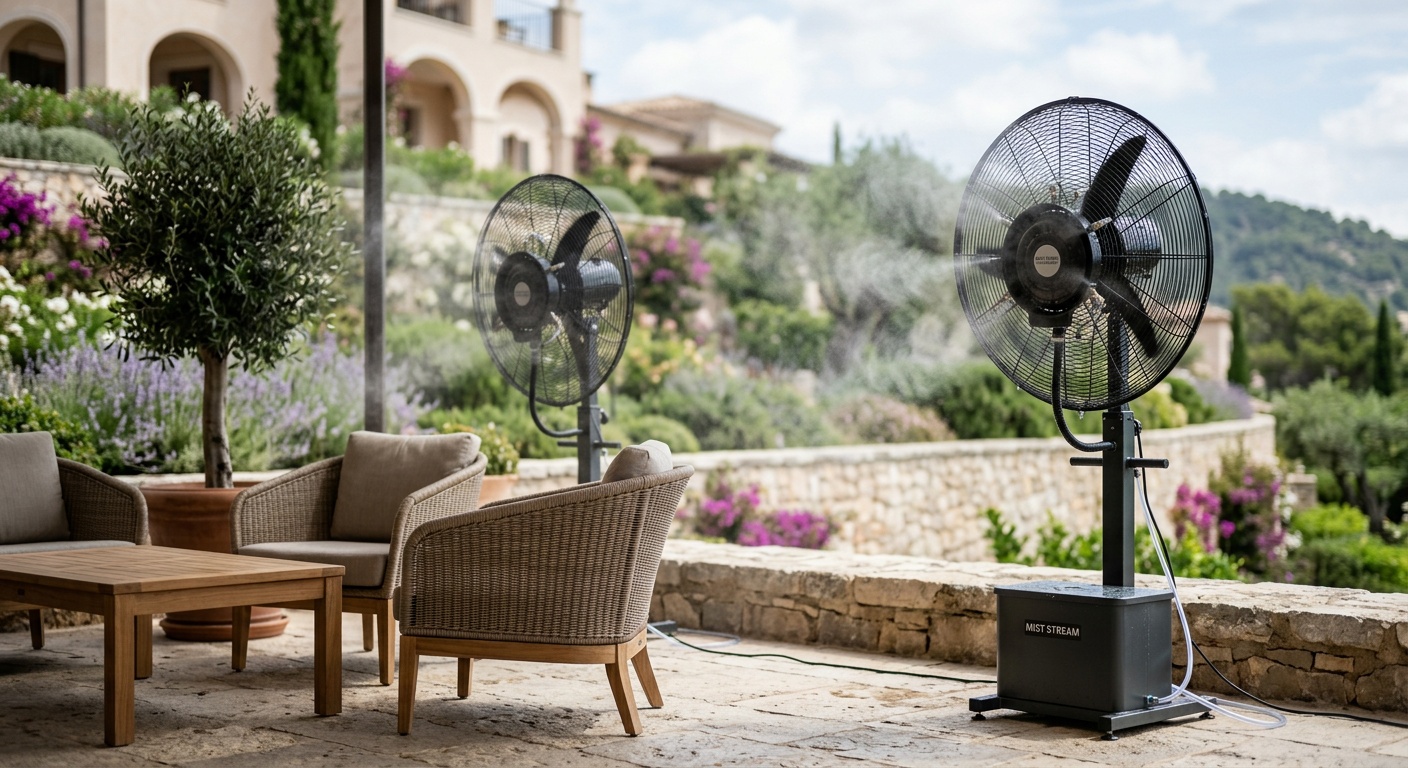
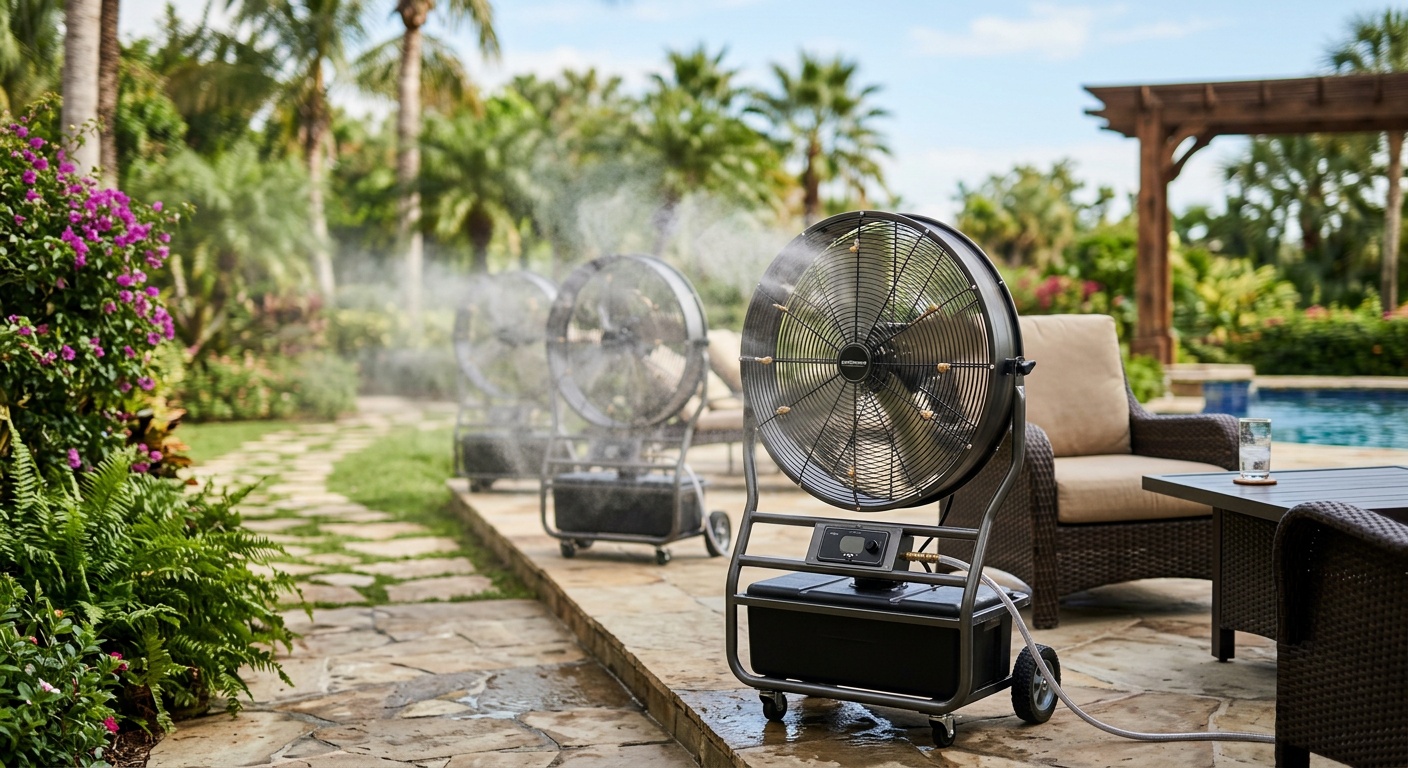
If you’ve ever walked through a misting zone at an outdoor festival or amusement park, you already understand the immediate relief a quality misting system provides. For residential use, these systems have become significantly more accessible in 2026, with a full installation running between $250 and $1,200 depending on coverage area and pressure specifications.
Low-Pressure vs. High-Pressure Misting Systems
Here’s where many first-time buyers make a costly mistake: confusing low-pressure and high-pressure misting systems.
- Low-pressure systems (garden hose pressure, around 40-60 PSI) produce larger water droplets that can dampen clothing and surfaces. These are budget-friendly ($30–$80 for a basic kit) but better suited for plant cooling or edge-of-patio use where guests aren’t directly underneath.
- High-pressure systems (800–1,200 PSI) produce ultra-fine droplets that evaporate almost instantly on contact with warm air, leaving guests feeling cool without feeling wet. These are the restaurant-patio standard and typically require professional installation.
- Mid-pressure systems (150–250 PSI) offer a middle ground — better mist quality than garden-hose systems without the full installation complexity. Brands like Orbit and MistyMate have solid mid-pressure options in the $120–$350 range as of 2026.
Quick Scenario: Imagine you’re hosting 30 guests for a graduation party in Austin, Texas, in late June. The forecast shows 97°F with 45% humidity. A mid-pressure misting system mounted along your pergola edges, running continuously on a timer, can realistically keep the area under your patio cover feeling closer to 82°F–85°F. Add a ceiling fan and a couple of strategically placed portable coolers, and your guests are genuinely comfortable.
Pro Installation Tips for Misting Systems
- Position misting lines at 8–10 feet height so droplets have maximum evaporation distance before reaching guest level
- Avoid pointing misters directly into wind direction — parallel or slightly angled against prevailing breeze is optimal
- Install a sediment filter to extend nozzle life, especially if you have hard water
- Use a timer or smart controller to run cycles (2 minutes on, 5 minutes off) to prevent surface saturation
Strategic Shade Structures That Do Heavy Lifting
Shade is the foundation of any serious outdoor cooling strategy. Direct sunlight can add 10°F–15°F to the perceived temperature almost instantly. The right shade structure doesn’t just block sun — it becomes the architectural backbone around which your other cooling solutions operate.
Your Shade Options in 2026
Shade Sails: These tensioned fabric canopies have exploded in popularity and for good reason. High-quality HDPE shade sails block 90–97% of UV rays while allowing air circulation. Prices range from $60 for a basic triangle to $400+ for commercial-grade rectangular sails with UV400 protection. They install in minutes and can be repositioned seasonally.
Pergolas with Shade Cloth: A pergola combined with snap-in shade cloth panels gives you the aesthetics of a permanent structure with the flexibility of seasonal coverage. This combination is particularly effective when you mount fans or misters to the pergola frame — essentially creating a purpose-built outdoor comfort zone.
Pop-Up Canopies: For parties without permanent infrastructure, commercial-grade pop-up canopies (10×10 or 10×20) offer instant shade deployment. Look for canopies rated UPF 50+ rather than basic polyester, which provides minimal UV protection despite blocking visible light.
Natural Shade Landscaping: This is the long game. Deciduous trees planted on the western and southwestern edges of your yard can reduce surface temperatures on your patio by 20–30% once established. Japanese maples, river birch, and crape myrtles are popular choices in warmer climates for their combination of shade density and ornamental appeal.
Portable Fans and Air Circulators Worth the Investment
Fans don’t lower air temperature — they lower perceived temperature through the wind chill effect, which for humans is substantial. A steady 3 MPH breeze can make 90°F feel closer to 82°F. At 8 MPH, that gap widens considerably. For outdoor entertaining, the goal is creating enough airflow across your gathering space to maintain constant evaporative cooling on skin surfaces.
Fan Categories That Actually Move the Needle
Outdoor Pedestal Fans: Weather-rated oscillating fans in the 18″–24″ blade range are workhorses for patio use. Look for IP44 or higher weather resistance ratings, which protect against splashing water — important when you’re running misters nearby. Brands like Lasko and Hurricane offer solid options in the $80–$160 range.
High-Velocity Tower Fans: Newer designs from Dyson and Shark in 2025–2026 include outdoor-rated tower fans with HEPA filtration and app connectivity. They’re premium ($350–$550) but incredibly quiet and powerful, making them excellent for dinner-party settings where conversation matters.
Industrial Air Movers (the hidden gem): Construction-grade air movers — the kind used for floor drying — are surprisingly excellent for large outdoor parties. At around $100–$180, they move enormous volumes of air per minute, cool down quickly when directed at misted zones, and can run all day without issue. They’re not glamorous, but they work.
Battery-Powered Portable Fans: For seating areas far from power outlets, high-capacity battery fans (10,000–20,000 mAh) can run for 8–15 hours on a charge. Position these at table level to create personal comfort zones for individual seating clusters.
Water Features and Cooling Stations
One of the most underrated cooling strategies for summer parties is giving guests access to dedicated water-based cooling experiences. These aren’t just fun — they’re genuinely effective thermal management tools.
DIY Cooling Stations: Set up a shaded table with a galvanized tub filled with ice water, rolled towels, and citrus-infused water spritz bottles. Total cost: under $40. This simple setup has become a staple at outdoor events in 2026 and guests consistently report it as a highlight. The act of applying a cold damp towel to the neck or wrists drops core temperature perception almost immediately.
Kiddie Pools as Foot Cooling Zones: Strategically placed shallow wading pools (even just 6 inches of cool water) give guests an easy way to cool down without leaving the party. For adult parties, position these in a semi-private corner with a towel station.
Evaporative Cooler Appliances: Standalone portable evaporative cooler units have improved dramatically in 2025–2026. Units like the NewAir AF-1000W or Arctic Air Pure Chill Pro push cooling air across a wet pad and can service a 150–250 square foot zone effectively. For smaller decks or covered patios, these are excellent standalone solutions. If you’re researching broader indoor-outdoor cooling options, resources on ac alternatives for home offer helpful context on how these technologies compare to traditional systems.
Frozen Treat Stations: Never underestimate the internal cooling power of a good popsicle. A commercial-grade ice cream chest filled with frozen treats costs virtually nothing to set up and provides your guests with genuine thermal relief from the inside out. Internal body temperature drops measurably after consuming frozen foods and cold beverages.
Head-to-Head: Cooling Solution Comparison
| Cooling Solution | Temp Reduction | Setup Cost | Humidity Effectiveness | Best For |
|---|---|---|---|---|
| High-Pressure Misting System | 15–30°F | $400–$1,200 | Dry climates best | Permanent patios, frequent entertaining |
| Shade Sail + Ceiling Fan | 10–20°F | $150–$500 | All climates | Everyday outdoor living |
| Evaporative Cooler Unit | 10–25°F | $80–$350 | Dry climates best | Covered patios, smaller gatherings |
| Outdoor Pedestal Fan | 5–10°F (perceived) | $80–$160 | All climates | Any outdoor space, portable |
| DIY Cooling Station | Localized relief | $20–$50 | All climates | Any party as supplemental cooling |
Cooling Effectiveness by Solution (Perceived Temperature Reduction)
Estimated Perceived Temperature Reduction (°F)
Note: Reductions vary by climate, humidity, and installation configuration. Dry climates yield maximum results.
Common Challenges and How to Beat Them
Challenge 1: High Humidity Limits Evaporative Effectiveness
In humid climates (coastal Southeast, Gulf Coast, tropical regions), evaporative cooling delivers less dramatic results because the air is already close to saturation. Here’s how to adapt:
- Double down on airflow: In humid conditions, moving air is your best ally. Use multiple high-velocity fans to create cross-ventilation through your outdoor space, which accelerates sweat evaporation from skin even when ambient humidity is high.
- Focus on shade quality: Blocking radiant heat from direct sun matters even more in humid climates. A 20% radiant heat reduction can make a genuinely meaningful comfort difference when evaporative methods are limited.
- Use cooling stations strategically: In high-humidity settings, cold towels, chilled beverages, and frozen treats become even more valuable because they deliver direct thermal relief rather than relying on air physics.
Challenge 2: Power and Logistics for Larger Gatherings
Running multiple fans, a misting system, outdoor speakers, and party lighting off a single residential circuit is a recipe for a tripped breaker mid-party. The 2026 solution to this has become remarkably elegant: portable power stations.
Units like the EcoFlow Delta Pro 3 or Jackery Explorer 3000 Pro (both released in 2025) provide 3,000–5,000 watt-hours of portable battery power — enough to run multiple fans, a misting pump, and lighting independently of your home electrical panel. These units retail for $1,500–$2,800 but have become standard equipment for serious outdoor entertainers and are also rentable through party rental companies in most major cities.
Challenge 3: Aesthetic Concerns — Cooling Equipment Ruining Your Party Vibe
Many hosts resist cooling infrastructure because they’re worried it will look industrial or intrude on the party’s aesthetic. This is a legitimate concern, and it’s solved through intentional design integration:
- Mount misting lines behind string lights so both share the same overhead run — the misters become nearly invisible
- Wrap fan bases with wicker, rattan, or cedar sleeves to integrate them into a natural aesthetic
- Choose shade sails in neutral tones (charcoal, cream, sage) that complement rather than contrast with your outdoor furniture
- Use decorative barrel coolers and galvanized tubs for ice and cold water stations that look intentional rather than improvised
Frequently Asked Questions
How much does it cost to set up an effective backyard cooling system for parties?
Costs vary widely based on the scale of your setup and the solutions you choose. A basic but effective system — a couple of outdoor pedestal fans, one or two shade sails, and a DIY cooling station — can be assembled for $200–$350. A mid-tier setup adding a mid-pressure misting system and a standalone evaporative cooler unit runs $500–$800. A premium permanent installation with high-pressure misting, pergola with shade cloth, and ceiling fans typically costs $1,500–$3,000 installed. The right investment depends on how frequently you entertain and the climate in your region.
Do misting systems make guests wet and uncomfortable?
This depends entirely on the system type. Low-pressure misting systems (connected to a standard garden hose) can produce larger droplets that dampen clothing, which many guests find uncomfortable. High-pressure misting systems (800+ PSI) produce an ultra-fine mist that evaporates almost entirely before reaching guest level — guests feel a pleasant cool sensation without getting wet. If you’re investing in a misting system specifically for parties, mid-to-high pressure is worth the additional cost to avoid the dampness issue.
What’s the single most effective cooling upgrade for someone on a tight budget?
If you can only do one thing, invest in quality shade. A 16’x16′ commercial-grade shade sail (around $180–$250) blocks up to 97% of UV radiation and reduces surface temperatures beneath it by 15–20°F almost immediately. Shade is the foundational layer that makes every other cooling strategy more effective. Once you have solid shade coverage, even a $90 pedestal fan becomes remarkably powerful in creating a comfortable zone. Starting with shade gives you the best return per dollar of any single cooling investment.
Your Summer Party Cooling Playbook: Next Steps
You now have the full picture — the science, the tools, and the real-world strategies that transform a sweltering backyard into a genuinely comfortable entertaining space. The key insight from everything we’ve covered? No single solution works in isolation. The hosts who consistently pull off comfortable summer parties are the ones who layer their approach: shade as the foundation, evaporative cooling as the primary temperature reducer, airflow as the accelerator, and cooling stations as the personal relief backup.
Here’s your practical implementation roadmap:
- Assess your climate zone first. If you’re in an arid region (Southwest U.S., Mediterranean), lean heavily into misting and evaporative cooling — the physics works strongly in your favor. If you’re in a humid region, prioritize airflow, shade quality, and direct cooling stations.
- Start with shade infrastructure before buying any appliances. Install shade sails or upgrade your pergola canopy before spending money on fans or misters. This decision gives you the most leverage on everything else.
- Add your primary cooling appliance — misting system or evaporative unit — based on your party frequency. If you host more than 4 times per summer, a permanent misting installation pays for itself. If you host occasionally, a portable evaporative cooler is more cost-effective.
- Layer in fans for airflow distribution. At minimum, two oscillating pedestal fans positioned to create cross-flow through your main gathering area.
- Always set up a cooling station — cold towels, iced beverages, frozen treats — regardless of what other systems you run. This is your guest-experience upgrade that costs almost nothing and gets noticed every time.
As climate patterns continue to shift into 2026 and beyond, outdoor entertaining isn’t going to get easier without intentional infrastructure. The hosts who invest in thoughtful cooling systems now will be the ones whose parties are remembered for the warmth of the company — not the heat of the day.
So here’s the question worth sitting with: Which of your upcoming summer gatherings could be transformed by even one of these upgrades? Start there. Your guests will notice the difference before you even finish setting up.
Article reviewed by Linda Phillips, Senior Architectural Consultant & Renovation Project Manager, on July 15, 2026