The Best Plants for Illinois Zone 5b/6a Hardiness: A Local Growing Guide
The Best Plants for Illinois Zone 5b/6a Hardiness: A Local Growing Guide
Reading time: 14 minutes
Ever stared at a beautiful plant at the garden center, brought it home with high hopes, and watched it die by February? If you’re gardening in Illinois’s Zone 5b or 6a corridor — think Chicago’s western suburbs, Peoria, Champaign-Urbana, or the Quad Cities — you know this frustration intimately. Illinois doesn’t just have weather. It has weather events: polar vortex intrusions, late April frosts, August heat domes, and everything in between.
Here’s the honest truth: thriving in Illinois isn’t about planting the prettiest thing on the tag. It’s about matching plant genetics to your specific microclimate. And in 2026, with growing-season shifts already nudging parts of northern Illinois from 5b toward 6a, that match matters more than ever.
This guide cuts through the noise. Whether you’re building a pollinator garden in Naperville or trying to anchor a backyard food forest in Springfield, you’ll find practical, tested recommendations grounded in Illinois-specific growing conditions.
Table of Contents
- Understanding Illinois Zone 5b and 6a
- Best Trees and Shrubs for Long-Term Structure
- Top Perennials That Truly Thrive
- Edible Plants and Food Garden Champions
- Overcoming Illinois-Specific Growing Challenges
- Illinois Zone Performance Chart
- Plant Comparison Table
- Frequently Asked Questions
- Your Illinois Garden Roadmap: Next Steps
Understanding Illinois Zone 5b and 6a: More Than Just Numbers
The USDA Plant Hardiness Zone Map divides regions by their average annual minimum winter temperature. Zone 5b means your coldest nights typically bottom out between -15°F and -10°F (-26°C to -23°C), while Zone 6a brings minimums between -10°F and -5°F (-23°C to -21°C). In Illinois, this gradient runs roughly from the Wisconsin border south through the I-80 corridor.
But here’s what the zone map doesn’t tell you: Illinois is brutal in ways that go beyond winter lows. The state’s flat topography means Arctic air masses arrive fast and without the buffering effect mountains provide. A site rated 6a can still experience a -12°F night once every decade. Conversely, urban heat islands in Chicago’s south suburbs have pushed some microclimates functionally closer to 6b.
The USDA updated its hardiness map in 2023, and data collected through 2025 confirms that many areas previously mapped as 5b are now borderline 6a. The Chicago Botanic Garden’s long-term records show the average last frost date in the northern suburbs has shifted approximately 5 to 7 days earlier over the past 30 years, giving gardeners a slightly longer window — but also introducing new pest and disease pressures from species previously killed off by harsher winters.
What This Zone Shift Means for You in 2026
The practical upshot: you can now push the envelope slightly with marginally hardy plants that would have been risky bets a generation ago. Crape myrtles, once firmly in the “don’t bother” category for Zone 5b, now survive mild winters in sheltered Springfield microclimates. But don’t get overconfident. The polar vortex events of 2019 and 2021 demonstrated that extreme cold can still devastate plants chosen without appropriate zone buffering.
The smartest strategy? Choose plants rated for Zone 4 or 5 as your backbone, then experiment with Zone 6 specimens in protected spots. This hedging approach lets you build resilience while still exploring the exciting plant palette that shifting zones make possible.
Best Trees and Shrubs for Long-Term Structure
Trees and shrubs are your garden’s investment portfolio. Choose wrong, and you’re not just losing a plant — you’re losing years. Choose right, and you’re building shade, habitat, and visual structure that compounds in value every season.
Native Trees: Illinois’s Own All-Stars
Bur Oak (Quercus macrocarpa) is arguably the king of Illinois native trees. Hardy to Zone 3, it laughs at polar vortex winters, tolerates compacted clay soils (the bane of most Illinois gardeners), and lives for centuries. A mature bur oak supports over 500 species of caterpillars alone — a biodiversity engine in your backyard. Plant it where it has room: 50 to 80 feet at maturity.
Serviceberry (Amelanchier spp.) offers a four-season performance that’s hard to beat at any price point. Spring brings white flowers before most trees leaf out. Early summer delivers blueberry-flavored berries that birds adore. Fall foliage goes orange-red with authority. It’s hardy to Zone 4, handles partial shade, and tops out at 15 to 25 feet — perfect for smaller suburban lots. Downy serviceberry (A. arborea) and Allegheny serviceberry (A. laevis) both perform beautifully across the 5b/6a corridor.
Pagoda Dogwood (Cornus alternifolia) is an underused gem. Its horizontal branching structure creates architectural drama even in winter. Creamy white flower clusters in May attract native bees in the dozens, and the dark blue-black berries in August are critical fuel for migrating songbirds. Hardy to Zone 3, it prefers part shade — making it ideal under the high canopy of oaks.
High-Performance Shrubs for Illinois Conditions
Buttonbush (Cephalanthus occidentalis) solves one of Illinois’s trickiest garden problems: wet, poorly-drained areas. This native shrub thrives in soggy spots where nothing else will grow, producing otherworldly white spherical flowers from July to September that attract an impressive range of pollinators. Hardy to Zone 5.
Ninebark (Physocarpus opulifolius) has earned its place as a workhorse shrub across Illinois. Native cultivars like ‘Diablo’ (deep purple foliage) and ‘Center Glow’ (golden-orange new growth) provide season-long color while offering excellent cold hardiness to Zone 2. They tolerate clay soil, drought once established, and shear beautifully if you need a more formal hedge.
Viburnum dentatum (arrowwood viburnum) deserves wider planting across the region. White flower clusters in May, blue-black berries in fall, and excellent wildlife value combine with near-bulletproof hardiness to Zone 3. It spreads slowly via suckers, forming thickets that provide excellent bird cover.
Top Perennials That Truly Thrive in Illinois
Perennials are where Illinois gardeners can really express themselves. The state’s native prairie heritage means you have access to one of the world’s richest palettes of tough, beautiful flowering plants perfectly adapted to your conditions.
Prairie Dropseed (Sporobolus heterolepis) is the ornamental grass Illinois gardeners have been waiting to discover. This fine-textured native grass forms elegant mounds 18 to 24 inches tall, blooms with delicately fragrant flowers in late summer, and turns stunning shades of orange in fall. Unlike many ornamental grasses, it’s not invasive. Hardy to Zone 3, it handles both clay and dry conditions with grace.
Wild Blue Indigo (Baptisia australis) is a slow starter — it takes three years to establish and really perform — but the wait is absolutely worth it. Once settled, it produces dramatic spikes of indigo-blue flowers in May and June, followed by interesting black seed pods that rattle in autumn breezes. The deep taproot makes it drought-tolerant and impossible to transplant once established. Choose its permanent home carefully. Hardy to Zone 3.
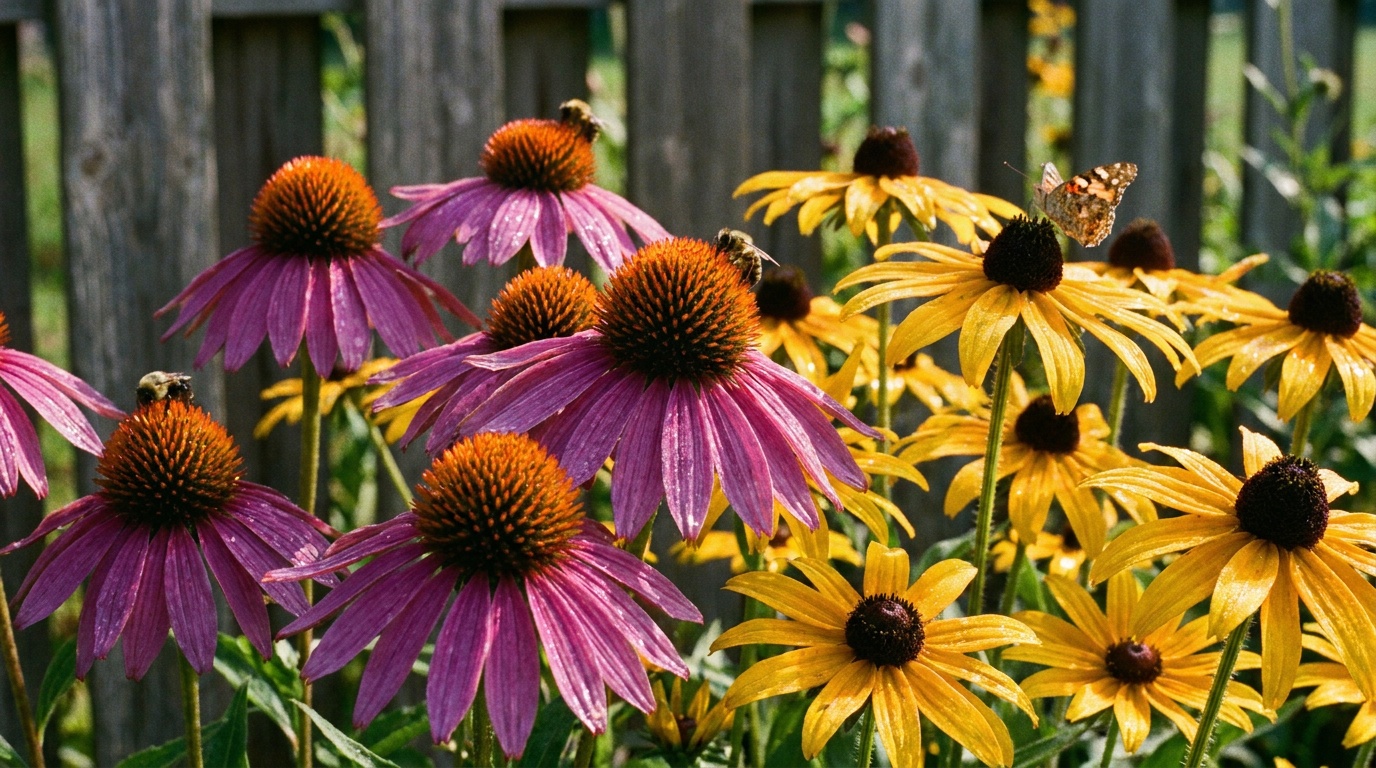
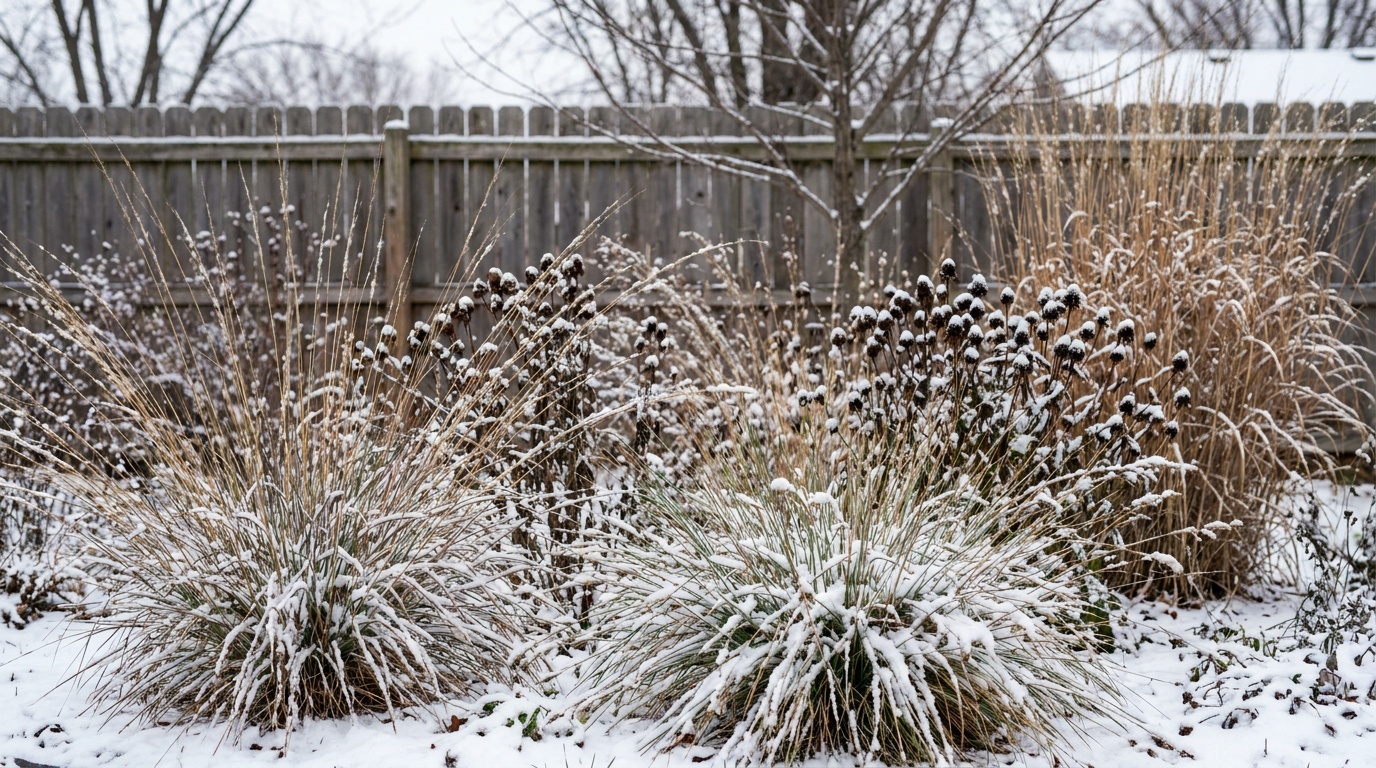
Purple Coneflower (Echinacea purpurea) needs no introduction, but it deserves more strategic use. Many gardeners make the mistake of deadheading obsessively. Stop. The seed heads provide critical winter food for American goldfinches and other seed-eating birds, and they look architectural under frost. The straight species outperforms most cultivars in Illinois conditions — resist the temptation of the novelty color selections, which are often less vigorous.
Rattlesnake Master (Eryngium yuccifolium) is the conversation piece your garden needs. Yucca-like rosettes of blue-green leaves send up tall flower stalks bearing round, thistle-like flower heads beloved by native bees and wasps. It looks exotic, but it’s a true Illinois prairie native, hardy to Zone 3, and drought-tolerant once established.
Consider this real-world scenario: a homeowner in Elmhurst, Illinois replaced a struggling lawn on the south side of her property with a prairie planting in 2023. By the summer of 2025, the planting — anchored by prairie dropseed, purple coneflower, black-eyed Susan, and wild blue indigo — required zero supplemental watering, attracted monarch butterflies for the first time in years, and dramatically reduced her annual maintenance hours. The setup cost was higher than traditional landscaping, but by the second full year, maintenance costs dropped by approximately 60%.
Edible Plants and Food Garden Champions
Illinois’s Zone 5b/6a corridor is genuinely excellent food-growing territory. The key is aligning your planting calendar with your specific location’s frost dates and leaning into crops that love the region’s warm summers and cool springs.
Pawpaw (Asimina triloba) is the native fruit tree experiencing a major renaissance among Illinois growers. Hardy to Zone 5, it produces large, custard-like fruits with tropical flavor in September and October. Unlike most fruit trees, it requires no spray program — insects and diseases simply leave it alone. Plant at least two different cultivars for cross-pollination. ‘Shenandoah’, ‘Susquehanna’, and ‘Mango’ all perform well in Illinois trials. The Illinois Extension Service has reported growing interest, with nursery sales of pawpaw up significantly in 2025 compared to 2022.
Asparagus (Asparagus officinalis) rewards the patient Illinois food gardener handsomely. Plant crowns in early spring, resist harvesting for the first two years, and you’ll have a bed that produces for 20+ years with minimal input. The feathery summer foliage is genuinely attractive in the ornamental garden. Male cultivars like ‘Jersey Knight’ and ‘Jersey Giant’ produce more spears and don’t waste energy on berries.
Garlic (Allium sativum) is one of Illinois’s most satisfying crops precisely because it’s planted in October and harvested in July — sidestepping the worst of the summer heat stress. Hardneck varieties like ‘Music’, ‘Chesnok Red’, and ‘German Red’ handle Illinois winters reliably and offer more complex flavor than softneck supermarket varieties. Plant 2 inches deep, mulch heavily with straw, and collect the bonus scape harvest in June before bulbs are ready.
Aronia berries (Aronia melanocarpa) are the underappreciated superfruit of Illinois gardens. Native to eastern North America, they’re hardy to Zone 3, virtually disease-free, and produce massive crops of antioxidant-rich dark berries in August. Fresh off the bush they’re astringent, but cooked into jams, syrups, or fermented into wine or mead, they’re exceptional. The fall foliage turns scarlet-red and rivals any ornamental shrub.
Overcoming Illinois-Specific Growing Challenges
Knowledge of what to grow only gets you halfway. The other half is understanding why plants struggle in Illinois and how to work around it.
Challenge 1: Heavy Clay Soil
Much of Illinois — especially the suburbs of Chicago and the central plains — sits on dense clay deposited by glacial activity. Clay compacts easily, drains poorly, and can bake rock-hard in summer droughts. The instinct is to amend with mountains of compost. That helps, but the longer-term solution is choosing plants adapted to clay: native oaks, ninebark, buttonbush, wild bergamot (Monarda fistulosa), and blue wild indigo all thrive in clay without extensive soil modification.
For vegetable beds and annual plantings where you need better drainage, raised beds filled with a quality mix are the single most effective investment you can make. A 12-inch raised bed effectively sidesteps clay problems entirely and extends your planting season by warming up faster in spring.
Challenge 2: Late and Unpredictable Frosts
Average last frost dates for the Zone 5b/6a corridor run from April 15 to May 5, but the key word is average. In 2025, a late frost event on May 8th damaged unprotected tomato transplants across central Illinois, catching growers who’d been lulled by a warm April. The practical solution is a layered defense: wait until after May 10 to set out frost-tender crops without protection, keep a supply of row cover fabric on hand, and watch localized forecasts rather than relying on calendar averages.
Challenge 3: Summer Heat and Drought Stress
Illinois summers regularly deliver stretches of 90°F+ heat combined with periodic drought. Plants like lettuce, spinach, and cilantro bolt quickly; shallow-rooted ornamentals suffer. The mitigation strategies are three-fold: mulch aggressively (3 inches of wood chips dramatically reduces soil moisture loss), water deeply and infrequently to encourage deep rooting rather than shallow water dependency, and select heat-tolerant varieties of vegetables. For salad greens specifically, plant in a location with afternoon shade, or switch to heat-tolerant alternatives like Malabar spinach and New Zealand spinach in midsummer.
Illinois Zone Performance Chart: Plant Survivability Ratings
The following chart shows approximate survivability and performance ratings (out of 100) for key plant categories in Illinois Zone 5b/6a conditions, based on cumulative data from University of Illinois Extension trials and Chicago Botanic Garden observations through 2025.
Illinois Plant Performance Index (Zone 5b/6a)
Scale: 0–100 | Based on cold hardiness, soil adaptability, drought tolerance & wildlife value
Sources: UI Extension Horticulture Program; Chicago Botanic Garden Plant Evaluation Program, data through 2025.
Plant Comparison Table: Illinois Zone 5b/6a Top Picks
| Plant | Type | Hardiness | Soil Tolerance | Key Benefit |
|---|---|---|---|---|
| Bur Oak (Q. macrocarpa) | Native Tree | Zone 3 | Clay, Dry, Compacted | 500+ caterpillar species supported |
| Wild Blue Indigo (Baptisia australis) | Native Perennial | Zone 3 | Clay, Dry, Well-Drained | Drought-proof once established |
| Serviceberry (Amelanchier spp.) | Native Tree/Shrub | Zone 4 | Adaptable, Prefers Moist | Four-season interest + edible fruit |
| Aronia Berry (A. melanocarpa) | Native Shrub | Zone 3 | Wet to Dry, Clay OK | High-yield edible, disease-free |
| Pawpaw (Asimina triloba) | Native Fruit Tree | Zone 5 | Rich, Moist, Well-Drained | No spray needed; unique tropical flavor |
Frequently Asked Questions
Can I grow hydrangeas reliably in Illinois Zone 5b/6a, and which ones?
Yes, but the choice of species matters enormously. Smooth hydrangea (Hydrangea arborescens) — including the popular ‘Annabelle’ and ‘Incrediball’ cultivars — is the safest bet, as it blooms on new wood each year, meaning even if the top is killed by a harsh winter, it will flower from new growth. Panicle hydrangea (H. paniculata) varieties like ‘Limelight’ and ‘Little Lime’ are equally reliable and actually prefer the full sun that Illinois summers deliver. The classic bigleaf hydrangea (H. macrophylla), beloved for its blue and pink mopheads, is the problematic one — it blooms on old wood, which regularly dies back in Zone 5b winters, resulting in leafy plants that rarely flower. The newer ‘Endless Summer’ re-blooming series performs better but still struggles in the worst winters. Stick with smooth or panicle types for consistently reliable blooms.
What are the best vegetables to start from seed indoors for an Illinois garden?
The most valuable crops to start indoors for Illinois Zone 5b/6a are tomatoes (8–10 weeks before last frost, so early to mid-March), peppers (10–12 weeks before last frost — late February for most of Illinois), eggplant (10 weeks before last frost), and celery (12 weeks before last frost, as it requires a long season). Brassicas — broccoli, cabbage, and cauliflower — benefit from indoor starts 6–8 weeks before transplanting, which for a late April transplant means starting in early March. Do not start crops like cucumbers, squash, and melons too early indoors — 3–4 weeks before last frost is plenty, as these fast-growing crops transplant poorly when root-bound and actually prefer to go out young. Basil should wait until nighttime temperatures are consistently above 50°F before going outdoors, regardless of frost dates.
Are there any invasive plants I should specifically avoid that are commonly sold in Illinois garden centers?
Absolutely, and this is a critical issue in 2026 as Illinois continues expanding its invasive species regulations. Burning bush (Euonymus alatus) remains widely sold despite being invasive in Illinois natural areas — its seeds spread aggressively into woodlands. Japanese barberry (Berberis thunbergii) was formally added to Illinois’s watch list in 2024 and creates dense thickets in forest understories while also harboring blacklegged ticks at higher densities. Norway maple (Acer platanoides) is still commonly planted as a street tree but naturalizes readily and displaces native understory plants by creating deep shade. Callery/Bradford pear (Pyrus calleryana) has been on the Illinois invasive species radar for years — if you have one, consider replacing it with a native serviceberry or native crabapple. Better native substitutes exist for all of these plants, so there’s no reason to take the ecological risk.
Planting Deep Roots: Your Illinois Garden Roadmap
You’ve got the knowledge. Now let’s turn it into action. Here’s a practical sequence for building a resilient, beautiful Illinois garden in Zone 5b/6a — whether you’re starting from scratch or refining what you already have.
Step 1: Audit What You Have (This Week) — Walk your property with a notepad. Note which existing plants are thriving without intervention and which are struggling year after year. Struggling plants in established soil conditions are telling you something important: let them go and replace with better-adapted choices.
Step 2: Choose Your Backbone Plants First (This Season) — Select 2–3 native trees or large shrubs appropriate for your lot size before adding anything else. These long-lived anchor plants create the microclimates — shade, wind protection, increased humidity — that everything else benefits from. A bur oak or serviceberry planted this spring will still be serving your garden (and Illinois’s ecosystem) in 2076.
Step 3: Build a Prairie-Inspired Perennial Layer (Year 1–2) — Rather than chasing annual color, invest in native perennials that establish and improve year over year. A combination of wild blue indigo, prairie dropseed, purple coneflower, rattlesnake master, and prairie blazing star (Liatris pycnostachya) will create a low-maintenance, high-impact planting that outperforms traditional landscaping in every metric that matters.
Step 4: Add Edibles Strategically (Year 2) — Once your ornamental structure is established, layer in food-producing plants. Start with asparagus crowns, garlic, and an aronia shrub. Add pawpaw trees if you have space. These perennial food plants require initial investment but deliver returns for decades.
Step 5: Observe, Adapt, and Expand (Ongoing) — Illinois gardens reward attentive gardeners. Track your first and last frost dates. Notice which plants the pollinators favor. Adjust based on your specific microclimate — that sunny south-facing wall might let you push one zone warmer for a special specimen.
Key Takeaways: Native plants outperform exotics in Illinois’s challenging conditions. Zone buffers beat zone-pushing for long-term reliability. Clay soil is a challenge but not a death sentence — choose accordingly. And the slow-burn investments — oaks, pawpaws, asparagus, wild indigo — always pay the biggest dividends.
Illinois gardening is changing. As zone lines shift and growing seasons evolve, the gardeners who thrive will be the ones who combine local knowledge with adaptive thinking — treating their landscapes not as static designs but as living systems to be guided and refined. The broader trend toward ecological gardening, native plant use, and food sovereignty isn’t just a hobby shift; it’s a meaningful response to landscape fragmentation and biodiversity loss across the Midwest.
So here’s the question worth sitting with: What does your piece of Illinois ground want to become — and are you ready to work with it, rather than against it? The plants are waiting. Your garden’s best chapter starts this season.
Article reviewed by Linda Phillips, Senior Architectural Consultant & Renovation Project Manager, on May 4, 2026