How to Choose Outdoor String Lights for Summer Parties
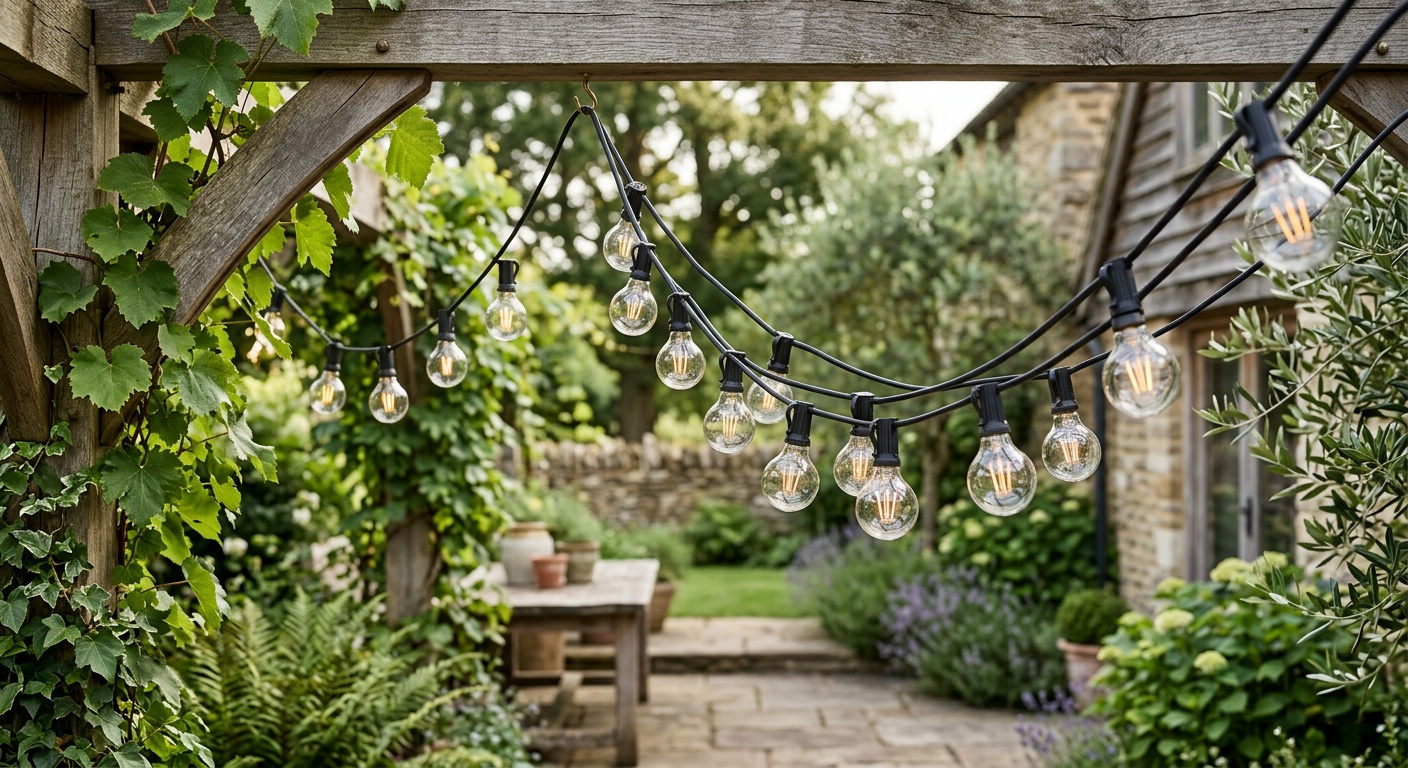
How to Choose Outdoor String Lights for Summer Parties: The Complete 2026 Guide
Reading time: 12 minutes
Picture this: It’s a warm July evening, your backyard is filled with laughter, and the golden glow of perfectly strung lights turns an ordinary patio into something straight out of a lifestyle magazine. Now picture the opposite — a tangled mess of flickering bulbs, tripped breakers, and a vibe that feels more like a construction site than a celebration.
The difference between those two scenarios? Knowing exactly what to look for before you buy. Outdoor string lights have exploded in popularity over the past few years — the global outdoor lighting market reached $15.8 billion in 2025 and is projected to hit $18.3 billion by 2027, with decorative string lights accounting for a rapidly growing share. But more options mean more chances to make the wrong choice.
Whether you’re hosting an intimate rooftop dinner, a sprawling backyard graduation party, or a full-scale summer wedding reception, this guide gives you the exact framework to choose the right outdoor string lights — confidently, efficiently, and without buyer’s remorse.
Table of Contents
- Why Your String Light Choice Actually Matters
- Types of Outdoor String Lights Explained
- Key Factors to Evaluate Before You Buy
- Head-to-Head: String Light Types Compared
- Setup Strategies for Maximum Impact
- Common Mistakes and How to Avoid Them
- Budget Breakdown: What to Expect at Each Price Point
- Frequently Asked Questions
- Light Up Your Summer: Your Party-Ready Action Plan
Why Your String Light Choice Actually Matters
Let’s be honest — not all string lights are created equal, and the stakes are higher than most people realize. A 2025 consumer survey by the Outdoor Living Association found that 74% of party hosts reported that ambient lighting was the single most commented-upon element by their guests, ranking above food presentation and music setup. That’s not a small number.
Beyond aesthetics, there are real practical concerns: safety ratings, weather resistance, energy consumption, and longevity. Buying the wrong lights can mean a soggy, shorted-out disaster when a summer storm rolls in, or an energy bill spike that ruins the memory of an otherwise perfect gathering.
Quick Scenario: Imagine you’ve spent two hours stringing lights across your pergola for a birthday dinner, only to have them flicker out mid-evening because the cord wasn’t rated for outdoor use. It happens more than you’d think — and it’s entirely preventable with the right information.
The bottom line: choosing outdoor string lights is a decision that intersects aesthetics, safety, practicality, and budget. Get it right, and it pays dividends every party season. Get it wrong, and you’re back on the product return line in August.
Types of Outdoor String Lights Explained
LED String Lights: The Modern Standard
LED string lights have firmly established themselves as the dominant choice in 2026, and for good reason. They consume up to 80% less energy than traditional incandescent options, last an average of 25,000–50,000 hours, and generate significantly less heat — which matters a lot when lights are strung close to fabric canopies, wooden structures, or dry foliage in summer.
Modern LEDs have also solved the old “cold, clinical light” problem. Today’s warm-white and amber LED bulbs are virtually indistinguishable from incandescent glow in casual settings. Brands like Brightech, ADDLON, and Govee (all actively innovating in 2026) offer LED globe strings that replicate the Edison bulb aesthetic at a fraction of the operating cost.
Best for: Long events, frequent hosts, permanent or semi-permanent installations, energy-conscious consumers.
Incandescent String Lights: The Nostalgic Choice
There’s a reason incandescent string lights still have a passionate following despite being technically “outdated.” The warm, slightly imperfect glow they produce has an organic quality that many people feel LEDs still can’t fully replicate — especially in photography and video, where the subtle flicker adds dimensionality.
However, the trade-offs are real. Incandescents run hotter, burn out faster (typically 1,000–3,000 hours), and draw considerably more power. If you’re hosting one or two special events per year and genuinely prefer the aesthetic, they can be a valid choice — but go in with eyes open about the ongoing costs.
Best for: Special occasions, photography-heavy events, users who prioritize traditional aesthetics over efficiency.
Solar-Powered String Lights
Solar string lights have undergone a dramatic transformation. Earlier generations were notoriously unreliable — dim by 10 PM, dead by midnight. The 2025–2026 generation of solar strings, however, features significantly improved photovoltaic panels and lithium-ion battery capacity that can sustain 8–12 hours of illumination on a full charge.
They’re ideal for locations without easy access to power outlets, or for eco-focused events. The main caveat: they need direct sunlight for at least 6 hours to perform well, which limits their reliability in shaded gardens or overcast climates.
Best for: Remote outdoor spaces, eco-conscious hosts, accent lighting supplementing a main string light setup.
Smart & Color-Changing String Lights
This is the fastest-growing segment in 2026. Smart string lights — typically LED-based with Wi-Fi or Bluetooth connectivity — allow you to control colors, brightness, and lighting schedules through a smartphone app or voice assistant integration (Amazon Alexa, Google Home, Apple HomeKit). Govee and Philips Hue have both launched outdoor smart string lines in 2026 with improved IP ratings and expanded color palettes.
For themed parties, this is genuinely transformative: switch from warm white during dinner to a dynamic color show for dancing, all without touching a switch.
Best for: Tech-savvy hosts, themed events, people who want maximum flexibility and show-stopping impact.
Key Factors to Evaluate Before You Buy
IP Rating: Your Weather-Resistance Roadmap
This is the most underestimated factor, and it’s non-negotiable. The IP (Ingress Protection) rating tells you exactly how well a light fixture resists dust and water. For outdoor string lights, here’s the practical breakdown:
- IP44: Splash-resistant — fine for covered patios, not suitable for rain exposure
- IP65: Dust-tight and jet-water resistant — suitable for open outdoor use in most climates
- IP67: Can withstand temporary submersion — excellent for coastal areas or high-rainfall regions
- IP68: Continuous submersion — rarely needed for string lights, but exists for specialized use
For summer party use in most North American and European climates, IP65 is the sweet spot. It handles unexpected rain without flinching while remaining widely available at reasonable price points.
Bulb Style and Color Temperature
Bulb style affects both aesthetics and mood. The main options:
- Globe bulbs (G40/G50): The classic “bistro light” look, versatile and universally flattering
- Edison/vintage bulbs (ST64): Industrial-chic, great for rustic or bohemian themes
- Fairy/micro lights: Delicate, whimsical, ideal for weaving through foliage or fabric
- Filament bulbs: Modern aesthetic with exposed LED filament, very popular in 2026 for upscale events
Color temperature is equally critical. Measured in Kelvins:
- 2200K–2700K (warm white/amber): The gold standard for social gatherings — flattering, intimate, inviting
- 3000K–4000K (neutral white): Cleaner and brighter, good for functional areas like food tables
- 5000K+ (cool white/daylight): Generally avoid for party settings — feels clinical and unflattering
Cord Material and Total Length
Cord quality is where cheap lights often cut corners. Look for:
- Heavy-duty rubber or thermoplastic (TPE) cord — resists UV degradation and temperature extremes far better than thin PVC
- Commercial-grade wire gauge (typically 18–16 AWG) for longer runs and better safety
- Black, brown, or green cords that blend with outdoor environments rather than white cords that look stark
For length planning: measure your intended run, then add 20% for natural draping and connection allowances. A 48-foot string typically covers a 40-foot span comfortably with a relaxed catenary curve.
Safety Certifications
In 2026, always verify your lights carry recognized safety certifications. In the US, look for UL Listed or ETL Listed markings. In the EU, CE marking combined with an independent safety body approval is the standard. These aren’t just bureaucratic checkboxes — they represent tested protection against electrical fires, shock hazards, and insulation failures.
Head-to-Head: String Light Types Compared
| Feature | LED | Incandescent | Solar | Smart LED |
|---|---|---|---|---|
| Energy Efficiency | ⭐⭐⭐⭐⭐ | ⭐⭐ | ⭐⭐⭐⭐⭐ | ⭐⭐⭐⭐⭐ |
| Lifespan | 25,000–50,000 hrs | 1,000–3,000 hrs | 15,000–25,000 hrs | 25,000–50,000 hrs |
| Weather Resistance | IP65 available | IP44 typical | IP65 available | IP65 available |
| Avg. Cost (48ft) | $25–$60 | $20–$45 | $30–$70 | $50–$120 |
| Party Versatility | ⭐⭐⭐⭐ | ⭐⭐⭐ | ⭐⭐⭐ | ⭐⭐⭐⭐⭐ |
Setup Strategies for Maximum Impact
The Canopy Method: Transforming a Plain Space
The canopy drape is arguably the most impactful string light configuration for outdoor parties. The technique involves anchoring strings from a central point (often a tall post or tree) and fanning them outward to perimeter anchor points, creating a tent-like ceiling of light above your gathering space.
Real example: Event designer Mara Holden documented a 2025 backyard wedding in Austin, Texas, where she used 12 strands of 48-foot warm white LED globe lights radiating from a 14-foot center pole, covering a 900 sq ft area. Total light cost: $480. Guest feedback consistently cited the atmosphere as “venue-quality” despite the private backyard setting. The setup required approximately 3 hours for two people.
Key tips for the canopy method:
- Use guide wire or steel cable as the primary support, with lights hanging from it — don’t use the cord itself as structural support
- Aim for 8–10 feet of height at center, dropping to 7 feet at edges for a natural, comfortable feel
- Use turnbuckles and eye bolts for adjustable tension — no sagging midpoints
The Perimeter Wrap: Defining Your Space
A perimeter approach runs lights along fence lines, railings, and rooflines to define the party space and create warm boundaries. This is the most beginner-friendly approach and works particularly well for long, narrow spaces like deck patios.
The key to making it look intentional rather than lazy: add vertical elements. Wrap lights around corner posts, spiral them up patio umbrellas, and weave them through railing balusters rather than just running a single strand along the top rail.
Mixing Scales for Depth
Professional event designers universally recommend layering different scales of light. A combination of overhead globe strings (macro scale), table lanterns or fairy-light votives (mid scale), and potted plant fairy lights (micro scale) creates dimensional ambiance that a single strand of overhead lights simply cannot achieve.
Pro Tip: Keep all light sources in the same color temperature range (e.g., 2200K–2700K) when mixing types. Mismatched color temperatures are what separates a polished setup from a hodgepodge of lights that just happen to be outdoors.
Common Mistakes and How to Avoid Them
Mistake 1: Underestimating Power Load
Overloading a circuit is the number one cause of string light failures at outdoor events. A standard 15-amp outdoor circuit can handle approximately 1,440–1,800 watts safely. A single 48-foot incandescent string might draw 40 watts; LED versions draw 7–10 watts. The problem comes when people daisy-chain strings without calculating cumulative load.
Rule of thumb: Never connect more than 3 string light strands end-to-end without checking the manufacturer’s specifications. Many LED strings have a maximum linkage of 5–10 strands. Exceed this and you risk insulation damage at the connection points. Use a dedicated outdoor extension cord with a built-in circuit breaker for longer runs.
Mistake 2: Ignoring Bulb Replaceability
This one bites people every time. Cheap string lights often use proprietary, non-standard bulbs that are impossible to replace when one fails. Before buying, confirm whether replacement bulbs are readily available and reasonably priced. Strings using standard E12 or E26 base bulbs give you flexibility to replace individual bulbs or even upgrade to different wattages down the line.
Mistake 3: Choosing Function Over Form (or Vice Versa)
Some buyers obsess over efficiency metrics and buy purely functional lights that look clinical outdoors. Others fall for beautiful Instagram aesthetics and buy lights with zero weather protection. The sweet spot: IP65-rated LED strings with G40 or Edison-style bulbs in warm white. This combination delivers looks, durability, and efficiency simultaneously and is widely available in the $30–$70 price range in 2026.
Budget Breakdown: What to Expect at Each Price Point
Here’s a realistic look at what the 2026 market delivers at different spending levels:
String Light Value by Budget (per 48ft strand)
Honest take: For most summer party hosts who entertain 5–10 times per season, the $45–$80 range delivers the best long-term value. You avoid the headaches of budget lights while sidestepping the complexity premium of smart systems unless you genuinely need dynamic color control.
Frequently Asked Questions
Can I leave outdoor string lights up all summer without taking them down?
Yes — provided your lights carry a minimum IP65 rating, are UL or ETL listed for outdoor use, and are mounted on proper structural supports rather than just their own cords. Most quality LED string lights sold in 2026 are designed for semi-permanent outdoor installation and can handle sustained exposure to sun, rain, humidity, and temperature fluctuations typical of summer months. That said, it’s worth inspecting connections and cord insulation every 4–6 weeks during the season and bringing lights indoors during severe storms as a precaution to extend their useful life.
How many string lights do I need for a typical backyard party?
A practical rule: estimate one 48-foot strand per 200–250 square feet of covered space for a canopy-style setup, or one strand per 40–50 linear feet of perimeter for a boundary approach. For a standard 400 sq ft patio, plan for 2–3 overhead strands plus 1–2 accent strands for pillars or railings. Always buy one extra strand beyond your calculation — gaps in lighting coverage are far more noticeable than a little extra warmth.
Are solar string lights reliable enough for parties that run past midnight?
With the improved solar technology available in 2026, the better models (typically $50+) can sustain 10–12 hours of operation after a full day’s charge. However, performance is heavily dependent on sunlight quality during charging hours. If your party space has significant shade, if the forecast shows heavy cloud cover on your event day, or if your event starts late and runs into the early morning, solar lights alone are not reliable as a primary light source. Use them as accent supplements to a wired LED main system for any event where consistent lighting is critical.
Light Up Your Summer: Your Party-Ready Action Plan
Here’s the straight talk: great outdoor lighting isn’t about spending the most money — it’s about making deliberate choices that align with your space, your events, and your priorities. As outdoor living continues to be one of the dominant lifestyle trends of the mid-2020s, the investment you make in quality string lights pays off not just in aesthetics but in the actual quality of experiences you create for your guests.
Here’s your practical checklist for getting it right this summer:
- ✅ Measure your space and calculate total linear footage needed, adding 20% buffer
- ✅ Confirm your power situation — count available outlets, calculate wattage load, buy a heavy-duty outdoor extension cord if needed
- ✅ Choose IP65 as your minimum for any lights that will be exposed to open sky
- ✅ Stick to 2200K–2700K color temperature for all lighting in the gathering space
- ✅ Verify UL/ETL listing before purchase — don’t skip this step for cost savings
- ✅ Plan your mounting approach (guide wires, hooks, posts) before the lights arrive
- ✅ Buy one extra strand beyond your estimate and keep replacement bulbs on hand
The outdoor entertainment space is no longer just a secondary area of the home — in 2026, it’s a primary living and hosting environment, and the lighting that defines it deserves the same thoughtfulness you’d give to interior design. As smart home integration continues to advance, even the line between indoor and outdoor lighting design is blurring meaningfully.
So here’s the question worth sitting with: When your guests walk into your backyard this summer, what story do you want your lighting to tell? Because with the right choices, those strings of light don’t just illuminate a party — they create the memory itself.
Article reviewed by Linda Phillips, Senior Architectural Consultant & Renovation Project Manager, on June 8, 2026